5 hr
Phi Phi PADI Discover Scuba: 2-Dive Beginner Experience
- Entry ticket
- Mobile voucher
- Valid same day
- Free cancellation
Phi Phi Scuba Diving — Morning Dive Trips from Ton Sai Pier
Down through limestone-shadowed water, into a quieter blue.
Compare fares, pick the fit — all bookings are mobile-voucher and eligible for free cancellation where shown.
5 hr
12 hr
5 hr
Choosing the right phi phi scuba diving package comes down to your experience level: dive shops on the island offer a no-certification taster, a full certification course, guided dives for existing divers, and an advanced program for going deeper.
| Discover Scuba Diving No certification |
Top pick PADI Open Water Course Beginner certification |
Fun Dive / Advanced Open Water Certified divers | |
|---|---|---|---|
| Prior experience needed | None | None | Open Water certification required |
| Duration | 1 day | Min. 3 days | 1 day (fun dive) or 2–3 days (advanced) |
| What's included | Briefing, gear, 2 guided dives | Theory, pool skills, 4 open-water dives, lifetime card | Guided reef dives or 5 adventure dives |
| Depth reached | Up to 12 m with instructor | Up to 18 m | 18–30 m depending on certification |
| Best for | Curious first-timers testing the water | Visitors wanting a lifelong diving qualification | Certified divers wanting more reef time or skills |
| See tickets & prices |
Verdict: First-time visitors with no certification and limited time should start with the PADI Open Water Course, while those simply curious can try a Discover Scuba Diving session and already-certified divers can book straight onto fun dives or an Advanced Open Water course.
Worth it for certified divers chasing marine life
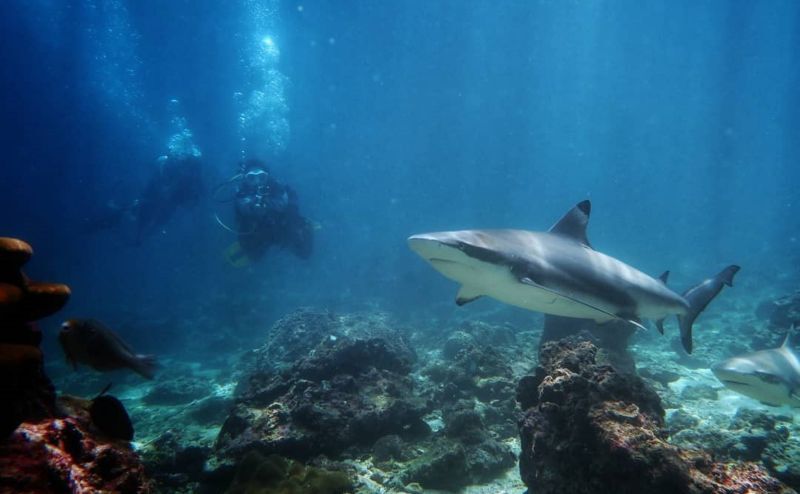
There is no gate fee at the Ton Sai Pier dive shops, so phi phi scuba diving costs only what each shop charges for its priced package. What you actually pay for is access to depth: leopard sharks resting on sandy bottoms, blacktip reef sharks patrolling the drop-offs, and hard coral gardens that snorkelers only glimpse from the surface. That is where the value math lands. A snorkel-only day is far cheaper and still shows you turtles and reef fish, but it caps you at the top few metres. If your goal is close encounters with pelagics and healthy coral, the paid tour earns its money. phi phi scuba diving tours pay off for certified divers and committed try-dive first-timers; casual paddlers who mainly want beach time will not recover the premium over a cheap boat-and-mask outing.
Bottom line: If you want depth, sharks, and real coral, a phi phi scuba diving tour is worth the premium; if you just want beach time, take the snorkel boat instead.
Hand-picked experiences loved by thousands of travelers
10 hours
Free Cancellation
Explore Thailand’s premier reefs with three guided dives in small, intimate groups.
3 days
Free Cancellation
Master scuba diving over three days with a comprehensive, stress-free certification course at stunning Racha Yai Island.
4.5 - 9 hours
Free Cancellation
Experience Phuket's best reefs with personalized dive trips for beginners and certified divers alike.
The larger of the two Bida islands south of Phi Phi Leh, its west-side walls descend to about 28 meters and are a reliable spot for leopard sharks resting on the sandy bottom. The name translates roughly to 'Outer Father Island' in Thai.
Known as 'Inner Father Island,' this site features a shallow archway crowded with tiny baitfish leading into a hard coral garden. Blacktip reef sharks and turtles are regularly sighted on its eastern side.
A submerged rock about 8 km southeast of Phi Phi Leh that breaks the surface at low tide, with a reef descending 19-21 meters on either side. Leopard sharks are so consistently seen here that day boats treat it as a near-guaranteed sighting site.
A steep limestone wall on the west side of Koh Phi Phi Leh, shallow enough for beginner divers and a common turtle-sighting spot. At low tide the rock's upper edge breaks the surface.
A sheltered bay on the east side of Koh Phi Phi Leh with a hard coral garden in just 2-12 meters of water, popular for both night dives and beginner snorkeling.
A limestone cavern on Phi Phi Leh historically used to harvest edible swiftlet nests, now visited on boat routes for its swim-throughs and soft coral formations nearby.
All the details about your upcoming adventure in one place
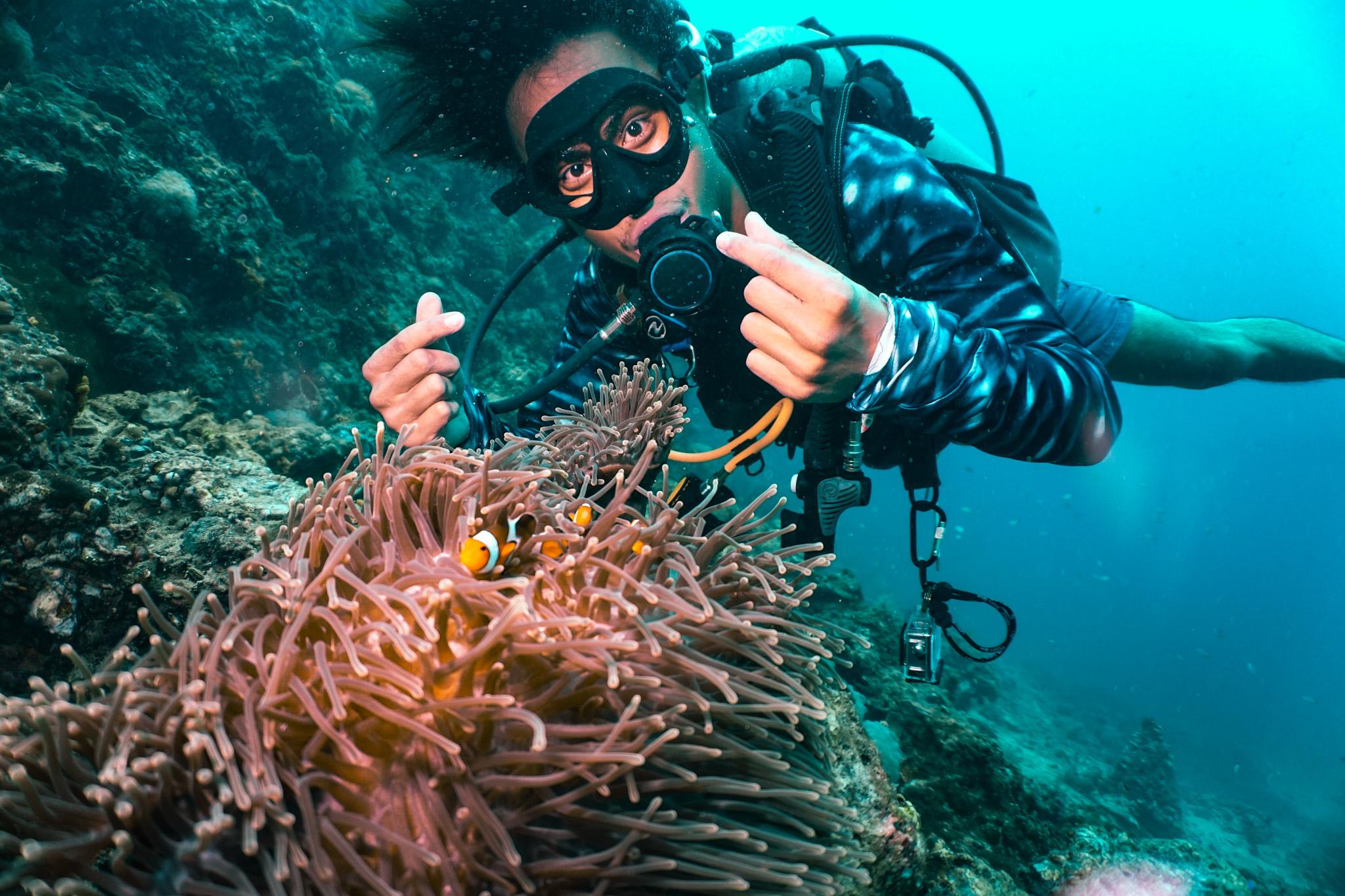
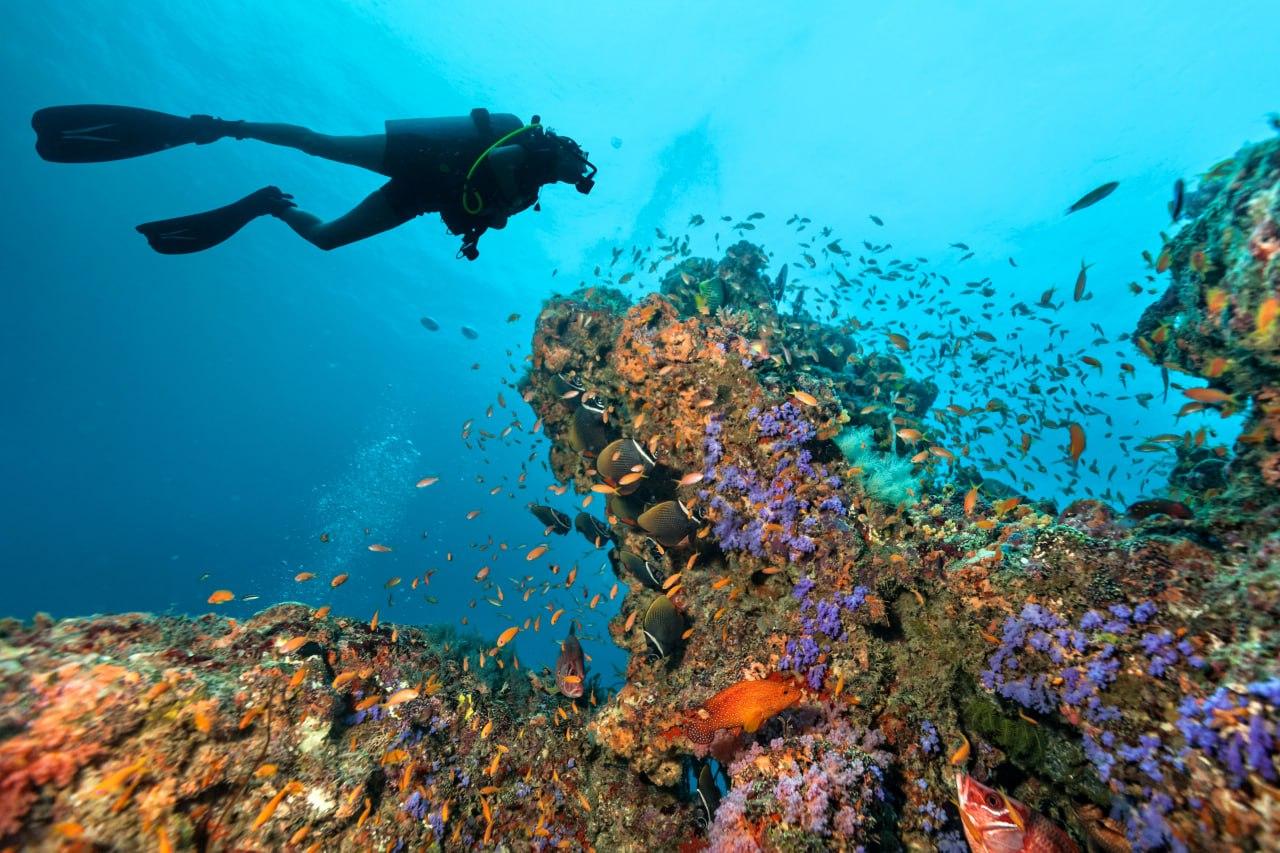
Phi Phi scuba diving takes you beneath the clear Andaman Sea to explore coral gardens, limestone drop-offs, and reefs alive with blacktip reef sharks, seahorses, and schooling barracuda. Certified PADI dive masters guide phi phi scuba diving tours across signature sites like Bida Nok, Bida Nai, and the sheltered walls near Maya Bay. Both first-time and experienced divers find suitable dive profiles, with warm water visibility that draws snorkelers and underwater explorers to Ko Phi Phi year-round.
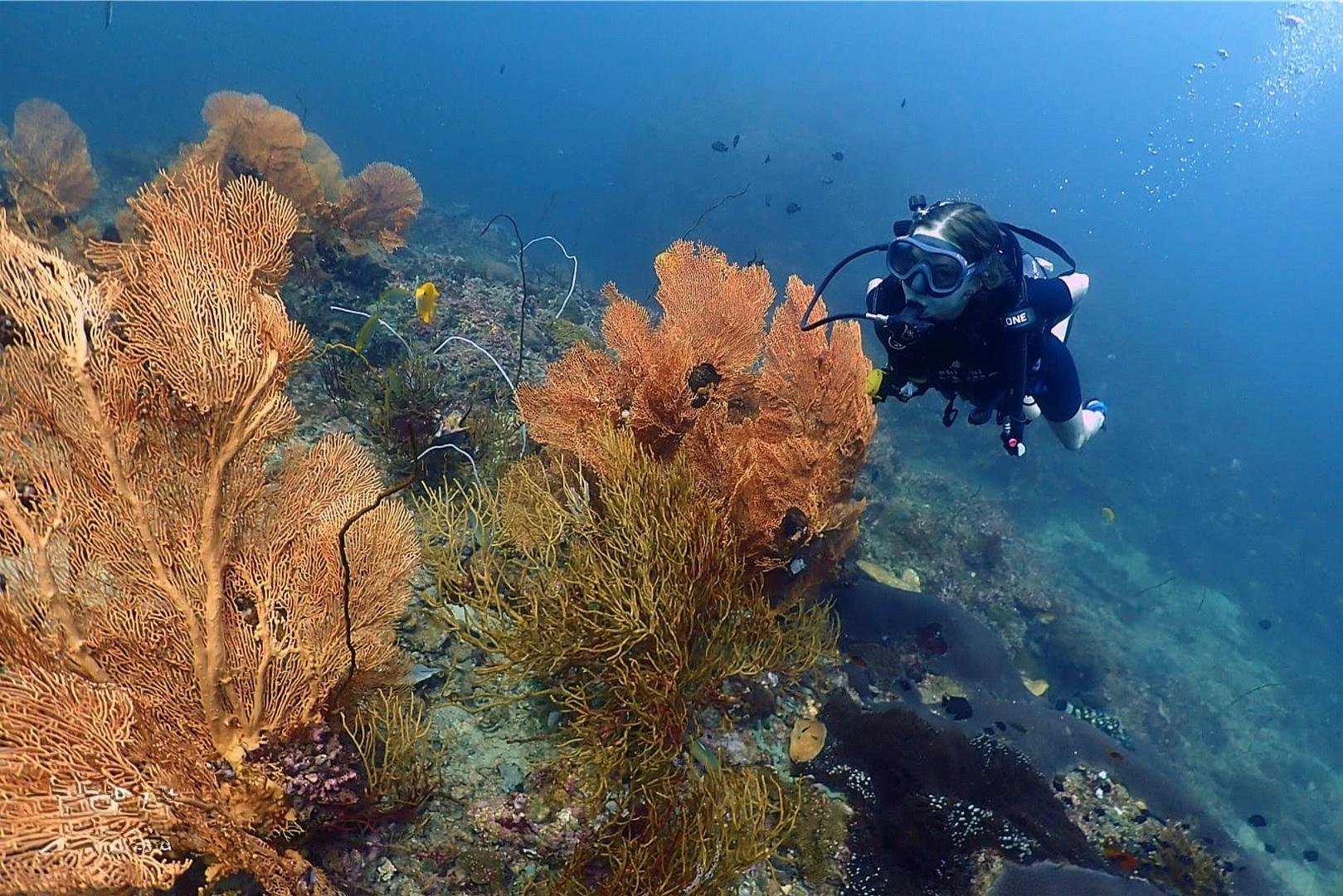
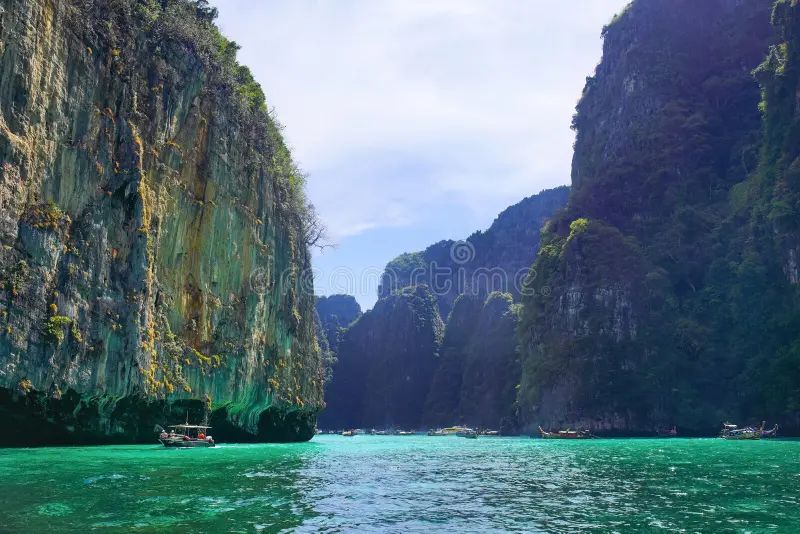
The limestone towers of the Phi Phi archipelago rise from water only recently formed. The Andaman Sea flooded these valleys around ten thousand years ago, drowning karst hills and leaving vertical cliffs that plunge below the surface as sheer underwater walls. What visitors see above the waterline at Ton Sai is only the upper half of a landscape that continues, unbroken, into the reef. The six islands of the group sit within Hat Noppharat Thara–Mu Ko Phi Phi National Park, designated in 1983 to protect both the karst and the coral fringing it. Diving here developed through the 1980s and 1990s as Krabi Province opened to travellers, and Ton Sai Pier became the departure point it remains today. The 2004 Indian Ocean tsunami struck the low isthmus of Phi Phi Don with particular force; the recovery that followed reshaped the village and renewed attention to the fragile reefs offshore. Phi phi scuba diving grew from that period into one of the anchors of the local economy. The dive sites themselves are named and distinct. Bida Nok and Bida Nai, two islets south of Phi Phi Don, offer walls draped in soft coral and swept by schooling barracuda. Anemone Reef and the nearby wreck of the King Cruiser ferry, sunk in 1997, lie within reach of longer trips. Hin Muang and Hin Daeng, further out, are known for larger pelagics, including the seasonal passage of whale sharks and manta rays through the deeper Andaman channels. Leopard sharks rest on sandy bottoms near Bida; blacktip reef sharks patrol the shallows. This is the underwater topography that a phi phi scuba diving tour is built to reveal. The reef itself is a living record. Staghorn and table corals form the shallow gardens; gorgonian sea fans and barrel sponges cling to the walls at depth. Reef fish move through in the tens of thousands — fusiliers, snappers, angelfish, the occasional hawksbill turtle grazing at a coral head. The clarity that makes the region famous depends on season and tide, and morning departures from Ton Sai chase the calmest, clearest hours before the wind rises. What draws divers back is less any single sight than the completeness of the setting: karst above, coral below, the two halves of one geology. The national park status keeps development at the water's edge in check, and the reefs, though pressured by their own popularity, remain among the most biologically dense in the Andaman. Phi phi scuba diving tours continue to carry travellers into that vertical world each morning, from a pier that has served the same purpose for four decades.

What visitors see above the waterline is only the upper half of a landscape that continues, unbroken, into the reef.
Most phi phi scuba diving operators allow free cancellation or date changes up to 24 hours before the scheduled departure, with a partial charge for later notice. There is no gate or entrance fee for the island itself (0 THB), so cancellation terms apply only to the priced dive package booked with each individual shop.
Weather · crowds · average price — dots go green to amber to red as each metric rises.
Calmest seas and best visibility of the year, coinciding with Thailand's high season crowds on Phi Phi. Water temperatures sit around 27-29°C with minimal rain.
Warmest water and clearest conditions for phi phi scuba diving, often cited as the peak window for sightings at Shark Point. Air temperatures climb toward 34°C by April.
Southwest monsoon brings afternoon squalls and choppier surface conditions, though sheltered east-side sites like Loh Samah Bay remain diveable. Crowds thin out compared to winter high season.
Wettest months with the least predictable sea conditions; some operators reduce trip frequency. Rates are typically lowest for phi phi scuba diving tours during this stretch.
Many phi phi scuba diving shops require check-in the day before a trip for gear sizing, since the island has no roads for last-minute logistics.
Refill stations are common at dive shops around Tonsai Village, reducing single-use plastic on boats.
Some operators cap groups at four divers per guide, which is worth confirming if you prefer a more personal experience.
The crossing to sites like Koh Bida Nok can be choppy outside the November-April high season, so tablets or wristbands help sensitive travelers.
Junior open-water divers must be at least 10 years old, so families should check age rules with the shop before booking.
Card payment isn't always available at smaller Tonsai Village shops for incidentals like gear rental add-ons.
Giant boulder jumbles on the island's west side form natural swim-through corridors, with leopard sharks resting on the sandy eastern side. Divers hover near the archway mouths where soft coral frames catch the light. Photographers booking phi phi scuba diving tours often rank this as a top wide-angle stop.
A shallow, coral-filled archway thick with tiny baitfish opens onto a hard coral garden, giving a classic silhouette-through-the-arch composition. The sandy bottom nearby is a reliable spot for leopard shark portraits.
A terraced reef wall on Phi Phi Leh's east side steps down from 2 to 20 metres, known as one of the area's most consistent blacktip reef shark and hawksbill turtle sightings. Position along the wall face for shark-silhouette shots against open blue water.
North of the cave itself, a cube-shaped artificial reef built after the tsunami now hosts leopard sharks, lionfish, and long-finned batfish among the coral-encrusted blocks. Divers frame low angles across the concrete structures for texture and marine life together.
A narrow crack splits the reef at around 10 metres, popular with macro photographers for its invertebrates and sheltered swim-through framing. It sits close to Maya Bay, so shots pair well with the surrounding limestone cliff backdrop.
Phi Phi scuba diving with young families works best when you split the day: divers head out early, non-divers explore Ton Sai village, and everyone reunites for lunch. Most shops around the pier area run family-friendly schedules, though not every boat is set up for small children.
Junior Open Water certification starts at age 10, with depth limited to 12m for 10-11 year olds diving alongside a certified parent or PADI pro. Younger kids from age 8 can try a pool-based Bubblemaker session instead, which stays in shallow water and needs no certification.
Many Phi Phi scuba diving tours offer reduced rates when booking 3+ people together, including a non-diving snorkeler. Ask shops near Ton Sai Pier directly, since discounts vary by operator and aren't standardized island-wide.
Ton Sai village has cafes, shops, and a beach within walking distance of the pier, so a parent staying back with toddlers has plenty to do during a half-day dive trip. Some phi phi scuba diving tours also welcome snorkelers on the same boat.
Arrive at 08:00–09:00 when boats depart for calmer water, then plan a slower afternoon since young kids and non-divers will be ready to rest after a morning on the water.
Dive shops near Ton Sai Pier provide child-sized gear for Bubblemaker sessions, but changing rooms and rinse showers are basic, so pack a dry bag and spare clothes for younger kids.
If seas turn choppy, ask your shop about swapping an open-water dive for a pool-based Bubblemaker or Seal Team session, which runs in sheltered, shallow conditions regardless of weather.
Most divers grab a quick bite in Ton Sai Village before boats leave for phi phi scuba diving trips, then return to the same lanes for a longer lunch or dinner once the tanks are back on the rack.
A pier-side favorite for an early coffee and pastry before an 08:00 departure, with cabinets of fresh bread and sweet buns that make for a fast, no-fuss breakfast.
A short walk from Ton Sai Pier, known for hearty Western and Thai breakfast plates; gets busy right in the pre-dive window, so order ahead if you are tight on time.
A village mainstay for breakfast and easy lunches, with Wi-Fi and a relaxed dining room that suits a quick refuel between phi phi scuba diving tours and an afternoon on the beach.
Colorful fruit drinks, coffee, and bingsu shaved ice near the pier, a good cool-down stop after an afternoon dive before heading to dinner.
A few minutes from the pier with shoreline seating, suited to a relaxed post-dive lunch or evening drink while boats come in.
Pizza, pasta, and ice cream in Ton Sai Village, a straightforward dinner choice after a full day out on Phi Phi Island.
Everything you need to know for your journey
February through May offers the warmest, clearest water for phi phi scuba diving, while November through April brings the calmest seas overall.
Reaching dive shops requires walking uneven, vehicle-free lanes from Ton Sai Pier, and boarding boats often involves a ladder or step down from the pier, so mobility-limited divers should contact the operator in advance.
Spearguns, coral collection tools, single-use plastic bags, and reef-harmful sunscreen are among the items not allowed on dive boats.
Yes, most shops offer a Discover Scuba experience with no prior certification needed, typically for divers aged 10 and up under instructor supervision.
Wear a swimsuit under light clothing for the boat ride; wetsuits for the water itself are provided or rented by the dive shop.
Bottled water and light snacks are typically included on full-day trips, while alcohol is not permitted on the boat before or between dives.
Children can join supervised snorkel outings at any age, while diving certification generally requires a minimum age of 10 under PADI junior open-water rules.
Cancellations made 24 hours or more before departure are usually free or lightly penalized; the island's 0 THB entrance fee means this policy applies only to the paid dive package.
The Phi Phi Viewpoint trail and Loh Dalum Beach are both within a short walk of Tonsai Village and combine easily with a diving day on Phi Phi Island.
A staircase climb from Tonsai Village leads to three tiered lookouts over Ton Sai and Loh Dalum bays. The trail has roughly 200-300 steps and a small entrance fee at Viewpoint 1.
A long crescent of white sand across the isthmus from Ton Sai Pier, popular for swimming and sunset beach bars. It sits opposite Tonsai Bay on the narrow strip that connects both sides of the island.
A dense grid of pedestrian lanes lined with shops, food stalls, and dive centers just inland from Ton Sai Pier. It's the commercial hub for all of Koh Phi Phi Don.
A quieter beach south of Tonsai Bay reached by a coastal trail past Viking Nature Resort. Shark Point, a shallow reef, sits just offshore and is accessible to snorkelers straight from the sand.
The most convenient base for phi phi scuba diving tours, since nearly every shop and the pier sit within this compact grid.
A calmer stretch south of Tonsai with resort-style properties facing Phi Phi Leh, popular with couples avoiding the Loh Dalum nightlife.
The island's northern tip hosts higher-end resorts reached by longtail boat, offering distance from the Tonsai crowds.
Backpacker-oriented guesthouses cluster along this bay, close to both the pier and the viewpoint trailhead.
Join thousands of happy travelers who have discovered this incredible experience
Book Your Experience Now