Phi Phi Island Tours

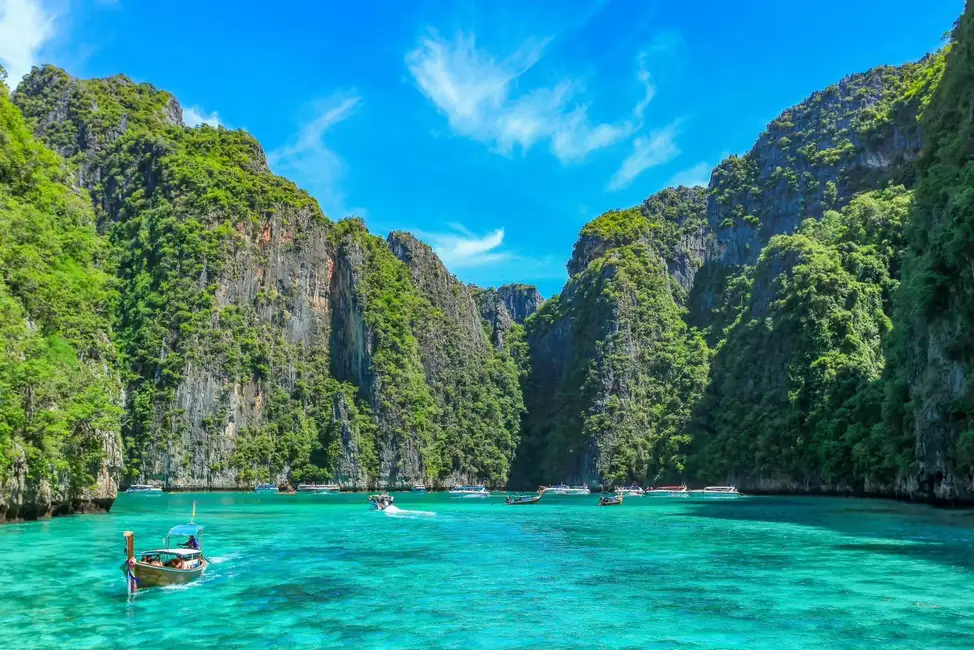
Six islands of karst walls, hidden lagoons, and coral shallows reached only by boat across the Andaman Sea.

Explore Attractions
Destination guide

Why Visit Phi Phi Island?

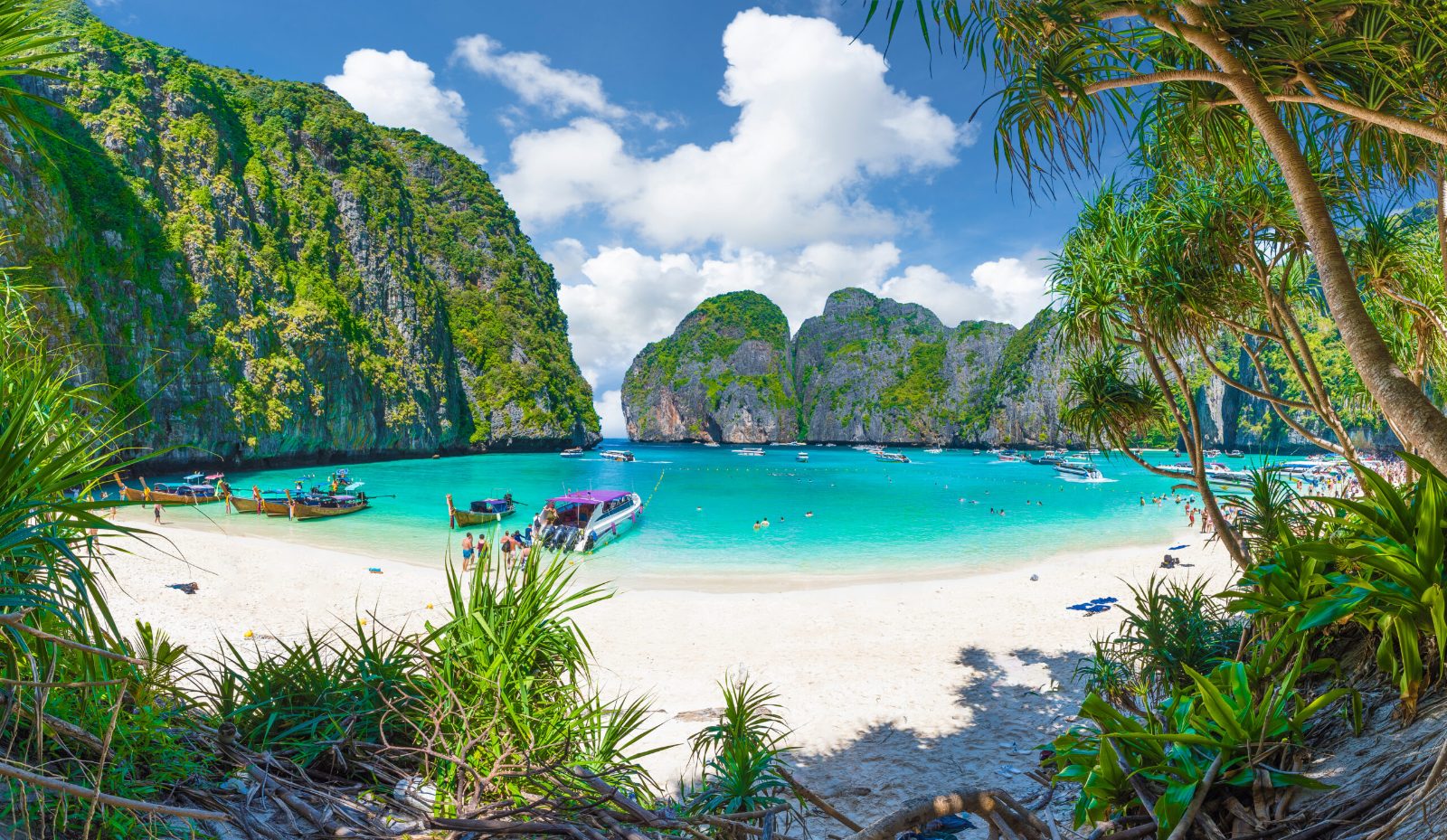
Phi Phi Leh, the postcard island every visitor pictures, has no permanent residents at all — its most famous beach was closed to boats for years to let the reef recover, and reopened under strict limits that still shape how the bays are seen today.

Read more Show less

That single fact captures the archipelago's character: a place governed as much by tide and protection order as by tourism.

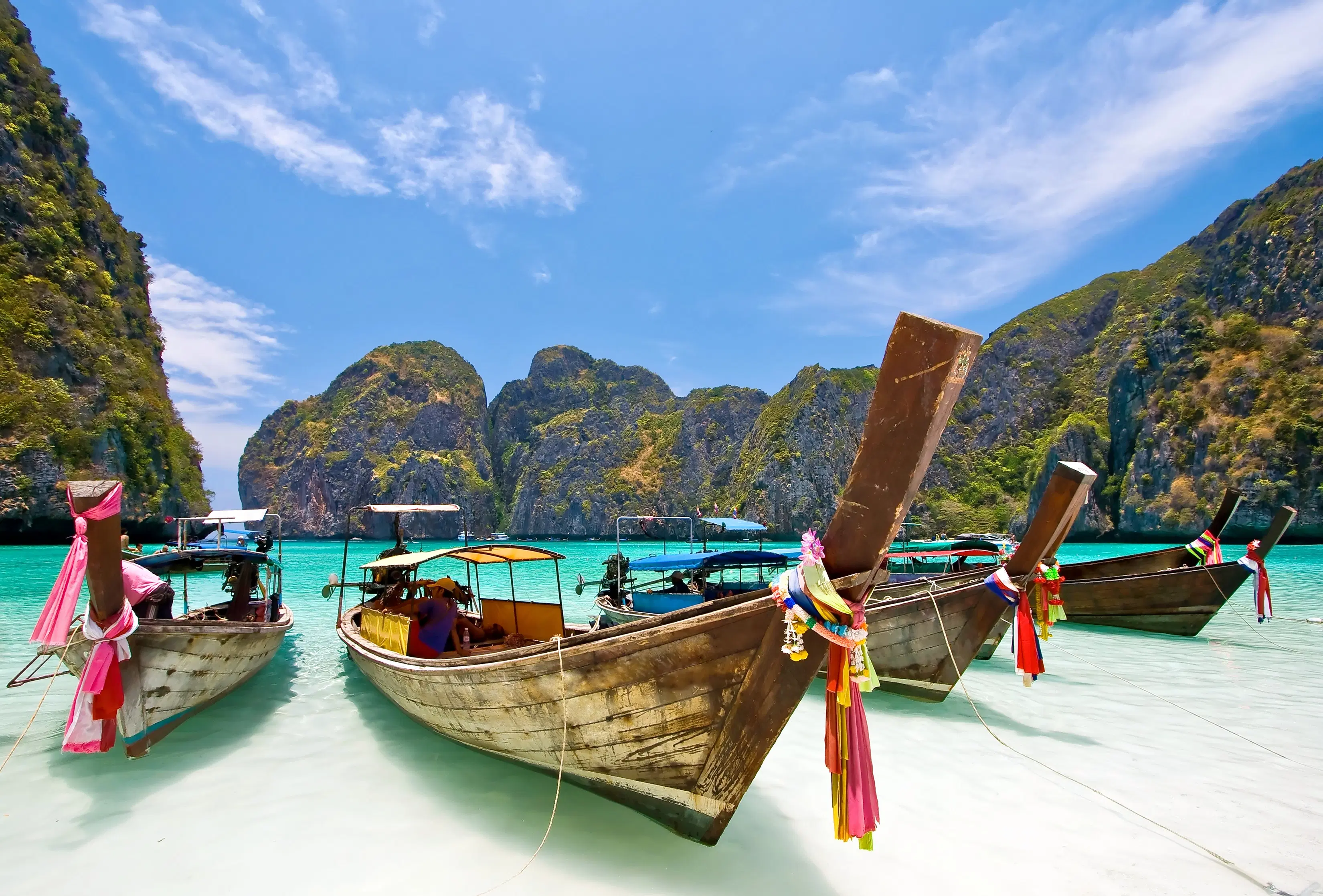
The islands were shaped by the sea and by limestone. Rising sharply from the Andaman, the karst walls of Phi Phi Don and Phi Phi Leh were carved over millennia into cliffs, sea caves, and half-hidden lagoons. A fishing and sea-gypsy heritage lingers in the longtail boats that still crowd Tonsai Pier, their engines and long propeller shafts a design older than the resorts. When a 2004 tsunami reshaped the low isthmus of Phi Phi Don, the community rebuilt on the same narrow neck of sand, and that resilience remains part of the island's story. Good Phi Phi Island Tours tend to read the place through that history rather than around it.

Today the destination fits together as a loose constellation of water-based experiences. Maya Bay & Early Bird outings chase the light before the day boats arrive. Private Longtail Boat Tours trace the coastline at their own pace, ducking into Pileh Lagoon and Loh Samah Bay. Scuba Diving & Snorkeling trips drop over reefs where blacktip sharks patrol the shallows near Bamboo and Mosquito islands. For those based on the mainland, Krabi to Phi Phi and Phuket to Phi Phi day trips stitch the archipelago into a single crowded, rewarding day. Each is a different lens on the same limestone and water, and together they make Phi Phi Island Tours tours legible to first-timers.

The archipelago suits a particular kind of traveler. It rewards those who accept its terms — no vehicles, limited shade, protected zones with entry rules — in exchange for coral gardens, viewpoints over twin bays, and lagoons the color of jade. Snorkelers and divers find some of the Andaman's most accessible reefs. Photographers find sheer walls and turquoise shallows in the same frame. Even those simply wanting a Phi Phi Island Tours tour without ambition find a full day easily filled between Viking Cave, Monkey Beach, and the open channel between the islands. A single well-planned set of Phi Phi Island Tours tickets can carry a visitor from sunrise calm to the last longtail home, the whole small world seen from the water that made it.

“A place governed as much by tide and protection order as by tourism.”

Car-Free Islands

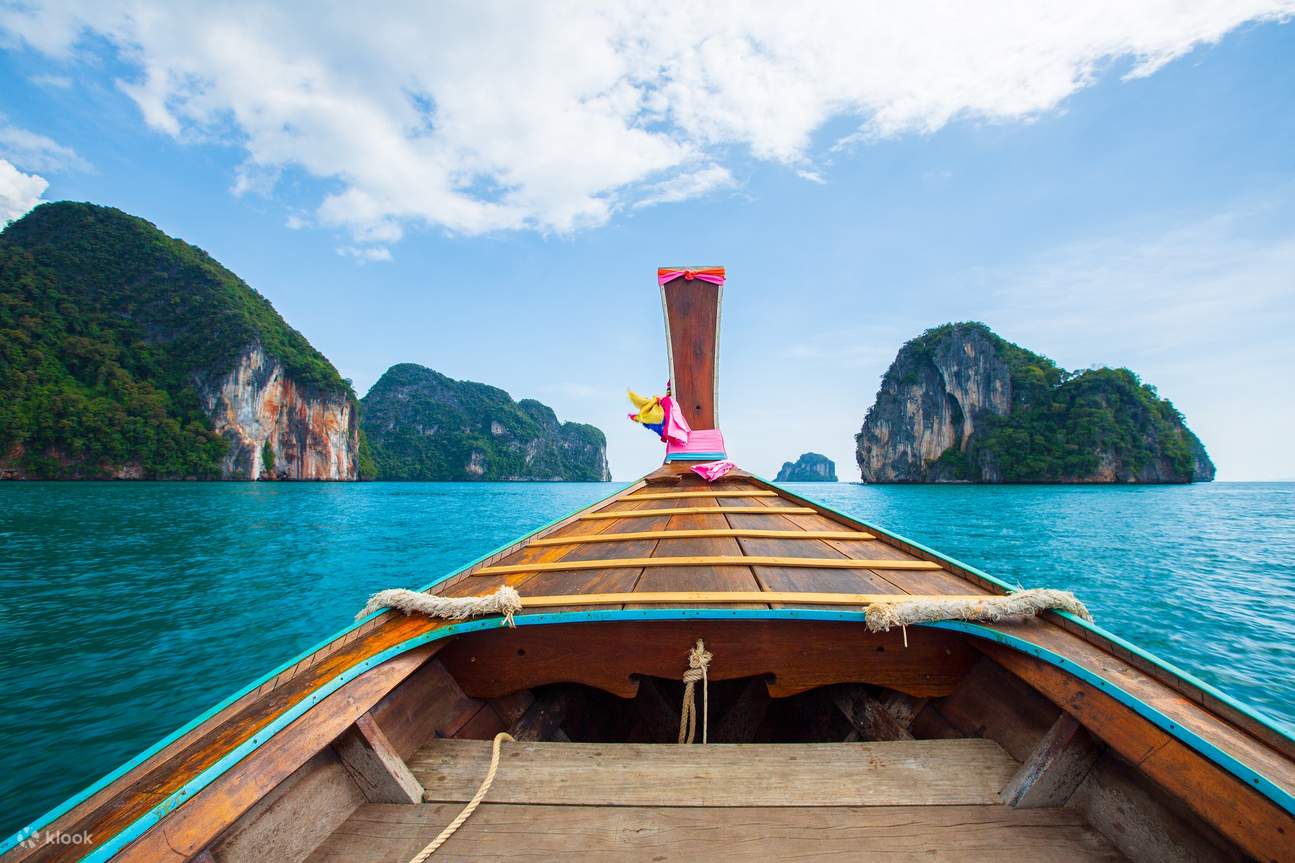
With no roads or vehicles, every journey happens on foot or by longtail boat across sheltered bays.

Maya Bay & Phi Phi Leh

The protected sister island shelters Maya Bay, Pileh Lagoon, and the Viking Cave beneath sheer limestone walls.

Andaman Reef Access

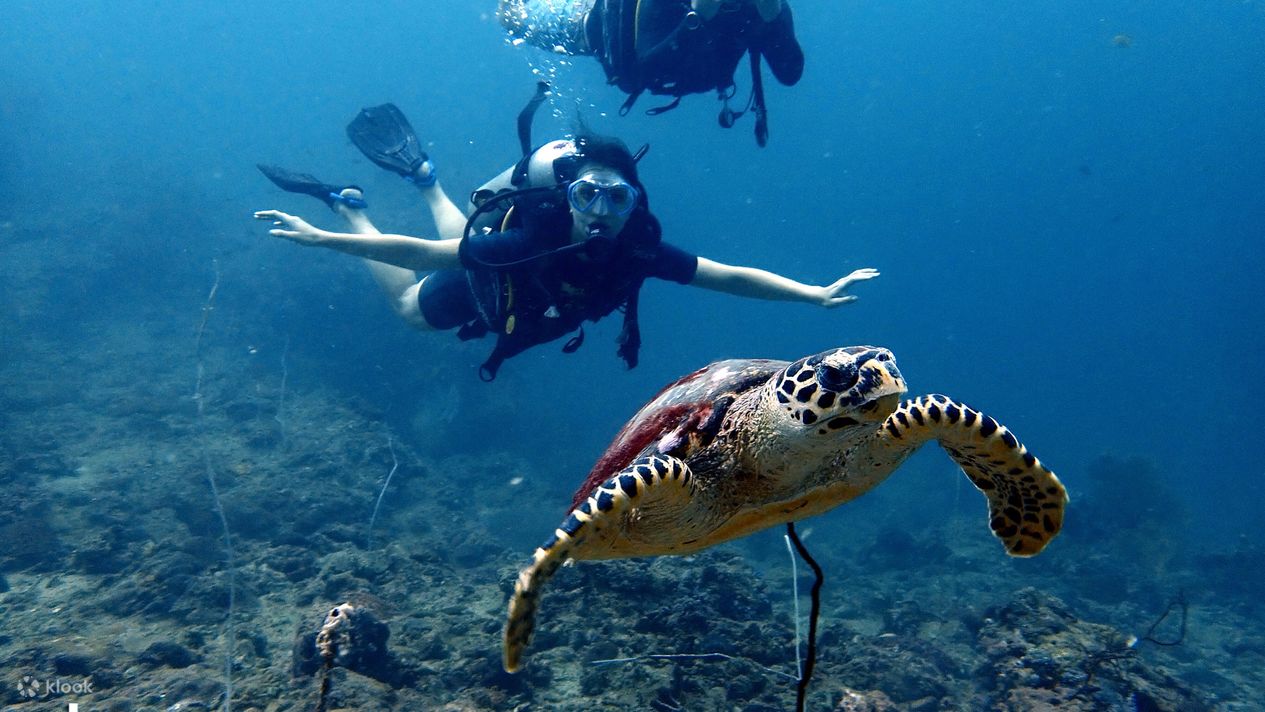
Shallow coral gardens and clear water make the archipelago a hub for snorkeling and scuba diving.

Most popular

Top attractions in Phi Phi Island

Nearly every way to experience Phi Phi Island happens on the water, so these pages sort tours by how you reach the sights and how much sea you want under you. Choose a private longtail for a flexible, at-your-own-pace day, or a fixed departure to Maya Bay's cliffs. If you're based elsewhere, the Phuket and Krabi day trips bring you in and out. Divers and snorkelers get their own page. Match the tour to your starting point, your budget, and whether you'd rather chase reefs or beaches.

All Attractions

Day plans

Phi Phi Island Tours Itineraries: 1, 2, and 3 Days

These plans scale from a single focused day to a three-day loop, each anchored on a Phi Phi tour that fits the time you have. Build outward from an early Maya Bay run or a private longtail charter, then layer in diving and the viewpoint hike as days allow. Stops are ordered to move logically by boat rather than doubling back.

1
06:00

Maya Bay early-bird tour

Board a dawn departure to reach Maya Bay before the day-trip crowds, roughly a half-day loop that also passes Pileh Lagoon and Viking Cave. Book the night before and confirm the pickup point.

View guide
2
Afternoon

Private longtail circuit

Charter a longtail for a flexible afternoon of quieter coves and snorkel stops on your own schedule, about three to four hours. Agree the route and stops with your boatman before setting off.

View guide
3
Evening

Tonsai wander

Walk the pier-side lanes on foot to close the day, since the island has no roads. Keep it loose after an early start.

1
Morning

Scuba diving or snorkeling

Join a guided dive or snorkel trip to sites like Bida Nok or Shark Point, a half-day out on the water with gear included. First-timers can ask about a discover-scuba session.

View guide
2
Afternoon

Phi Phi Viewpoint hike

Climb the stepped trail to the island's ridge lookout, around 30-45 minutes up with rest platforms partway. Carry water and go when the midday heat eases.

3
Evening

Long Beach stroll

Hop a short longtail to Long Beach for a slow shoreline walk before returning. A calm counterpoint to a water-heavy day.

1
Morning

Arrive via Phuket day trip

Come in on a Phuket-based day tour that folds the crossing into a guided island loop, a full-day format if you are starting from that side. Confirm whether an overnight extension is allowed.

View guide
2
Morning

Arrive via Krabi day trip

Alternatively arrive on a Krabi day trip covering the same island highlights from the eastern gateway. Choose one arrival route, not both.

View guide
3
Afternoon

Settle and snorkel nearby

After arrival, ease in with a short snorkel off a close reef before the light drops. Keep the first afternoon low-key.

View guide
Where to go

Phi Phi Island Tours Neighborhoods: Tonsai, Loh Dalum, Long Beach and Laem Tong

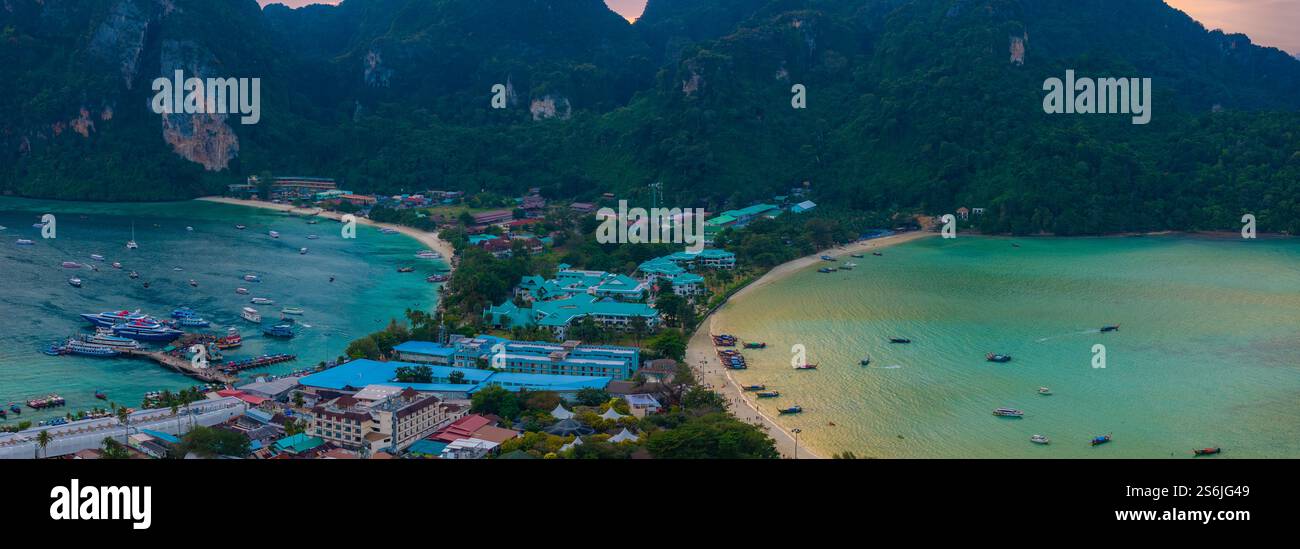
Phi Phi Don has no roads or vehicles, so its four main areas are defined by beach and walking distance rather than streets. Tonsai sits on the narrow isthmus where the pier lands, with Loh Dalum just behind it on the north shore; Long Beach and Laem Tong stretch further out and are reached by longtail rather than on foot.

Tonsai Village

The commercial core of the island, packed onto narrow car-free lanes with dive shops, tailors, convenience stores, and a dense run of restaurants and bars. It suits visitors who want to be in the middle of things and don't mind noise or crowds after dark.
Loh Dalum Bay

A curved, shallow-water bay directly behind Tonsai that functions as the island's day beach and its nightlife stage, with fire shows and sound systems taking over after sunset. It's built for a younger, party-oriented crowd rather than anyone seeking quiet.

Long Beach

A quieter stretch of sand on the southeastern coast, reached by a short longtail ride or a walking trail, with calmer water and a more residential, low-key feel. It works for couples or families who want proximity to Tonsai's amenities without its noise.

Laem Tong

The island's northern tip, home to a small sea-gypsy village and a handful of upscale resorts, cut off from the rest of Phi Phi by distance and water. It suits travelers prioritizing seclusion and comfort over nightlife or walkable variety.

Getting around

Getting Around for Phi Phi Island Tours: Boats, Piers and Walking

Every arrival on Phi Phi funnels through one point, and once you're off the boat, your own feet handle the rest. There are no cars, motorbikes, or tuk-tuks on the island, so getting around means walking Tonsai's lanes or hopping on a longtail.

Walking

Tonsai Pier is the single entry point for ferries from Krabi and Phuket, and from there Tonsai Village unfolds as a compact grid of narrow, car-free lanes connecting the two bays. Most guesthouses, dive shops, and restaurants sit within a 10-15 minute walk of the pier, so luggage in hand is the norm for the first stretch.

Longtail Boat

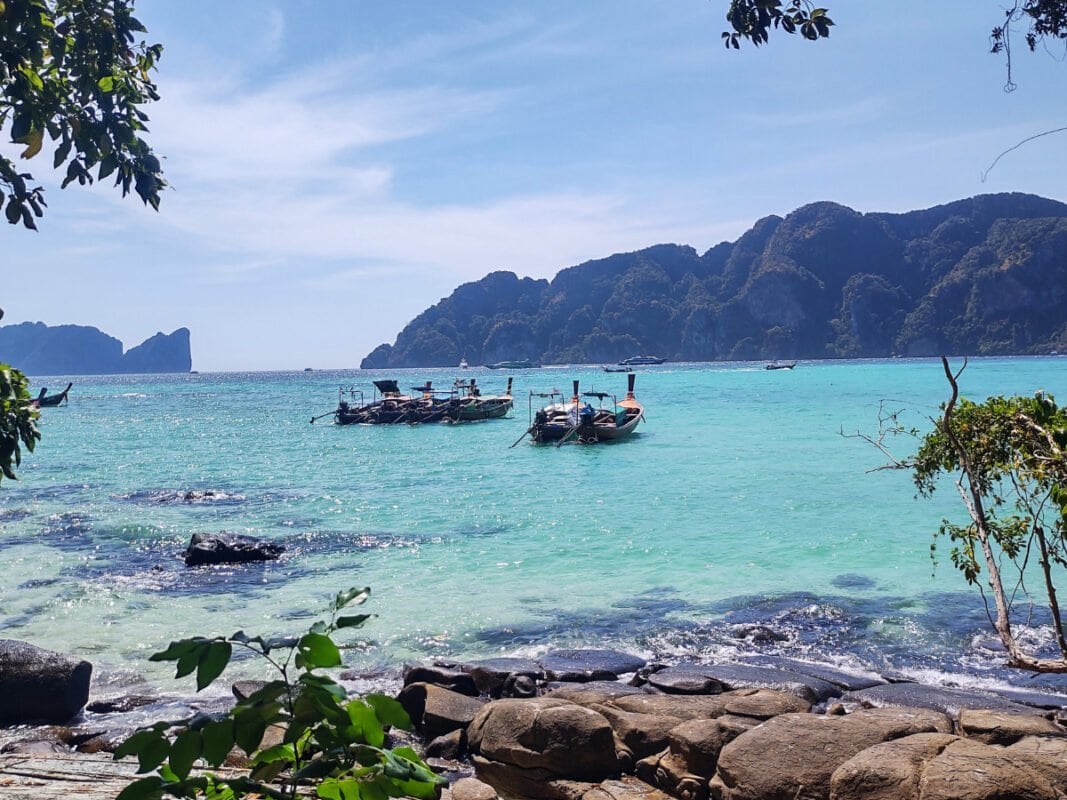
Longtail boats double as water taxis, lined up along Tonsai's beach to run visitors to Long Beach, a short hop of around 10-15 minutes favored by day-trippers and swimmers skipping the walk over the headland. Drivers wait at the shoreline rather than a fixed stand, so flagging one down or asking at a dive shop is standard practice.

Longtail Boat

Reaching Laem Tong on the island's northern tip takes roughly 20-30 minutes by longtail from Tonsai, passing limestone cliffs and small coves along the way. Departures aren't scheduled, so boats leave once a driver has enough passengers, and exact fares are best confirmed at the pier (see Budget for cost ranges).

Walking

A jungle trail also connects Tonsai to Long Beach and on toward Laem Tong for travelers without heavy bags, involving some uphill sections through the island interior. It's a workable alternative to the boat when the sea is choppy, though it's not practical with full luggage.

From the airport: From Krabi Airport (KBV), it's a minivan or taxi transfer to Klong Jilad Pier (about 30-45 minutes, ฿150-500) followed by a ferry to Phi Phi (1.5-2 hrs, ฿350-450), with joint through-tickets sold at airport counters; from Phuket Airport (HKT), transfer to Rassada Pier takes about an hour (฿150-800) before a 1.5-2 hr ferry or speedboat to Phi Phi (฿400-600).

When to go

Best Time for Phi Phi Island Tours: Dry Season vs Monsoon

November through April is the reliable window for Phi Phi Island Tours, with a dry season that keeps the Andaman calm and Maya Bay's water clear, matching the peak-season facts of busiest crowds in December-January and around Songkran in April. May through October brings the southwest monsoon, when tours cost less but grow far less certain.

November-April

Dry, sunny, 25-31°C, low humidity Busiest, especially Dec-Jan and Songkran

Seas stay calm and visibility at Maya Bay is at its clearest, making this the most dependable stretch for boat tours and outer-island routes.

May-July

Shoulder monsoon, 26-31°C, afternoon showers Thinner, lower rates

Tours still run but crossings turn choppier and rain arrives in short, unpredictable bursts rather than all-day downpours.

August-September

Peak monsoon, rough seas, heavy rain Quietest, cheapest

This is when cancellations cluster most and some outer-island routes are scrapped for the day if swells are unsafe, so build flexible dates into any booking.

October

Monsoon tail end, gradually calming Low, prices still soft

Conditions improve steadily through the month, offering a lower-cost middle ground between full monsoon risk and dry-season crowding.

Costs

Phi Phi Island Tours Budget: What Things Cost

Phi Phi runs more expensive than mainland Krabi or Phuket Town, since nearly everything—food, water, fuel, building materials—arrives by boat. A visitor should budget above typical Thailand rates, particularly for lodging and any tour or transfer that leaves the island.

Mid-range hotel/night beachfront guesthouse or villa
฿2,500-3,800
Budget hostel bed/night Ton Sai or Loh Dalum area
฿400-1,200
Sit-down meal mid-range restaurant
฿150-250
Coffee cafe, not 7-Eleven
฿70-100
Local beer (630ml Chang)
฿100-160
Ferry from Krabi or Phuket one-way, per person
฿350-600
Longtail short hop per person, pier to beach
฿100-200
Longtail private charter per hour, negotiable by group size
฿500-800

Daily budget: A workable daily budget runs ฿1,200-1,800 per person for a backpacker mixing hostel beds and street-side meals, versus ฿3,500-5,500 for a mid-range traveler adding a private room, sit-down meals, and a boat tour or two.

Food & drink

Where to Eat Around Phi Phi Island Tours: Seafood and Tonsai Market

Phi Phi Island Tours puts fresh catch at the center of the plate, with grilled fish and prawns turning up on nearly every menu in Tonsai Village. Alongside the seafood restaurants, a nightly street-food market keeps the budget end of the scene honest.

Tonsai Market

฿15-80 per item

market

Daily market in the center of Tonsai Village where vendors cook meat and seafood skewers, pad thai, and noodle dishes in large woks; a stall selling mango sticky rice near one end of the market is a regular favorite.

Tonsai Seafood Restaurant

฿฿฿

venue

Beachfront restaurant in Tonsai Village known for grilled and steamed fish, prawns, and other fresh catch served with island views.

Pa Noi Thai Food

฿

venue

Family-run restaurant in Tonsai Village serving budget Thai standards like pad thai and curries, popular for its low prices and casual service.

Acqua Restaurant

฿฿

venue

Mid-priced restaurant along the main Tonsai strip mixing modern Thai dishes with European plates, open for breakfast, lunch, and dinner.

Grilled seafood platters

฿฿-฿฿฿

dish

Whole fish, squid, and prawns grilled to order, sold at seafood-focused restaurants lining Tonsai's main street between the pier and Loh Dalum beach.

Pad Thai

฿30-60

dish

Stir-fried noodles with egg, bean sprouts, and shrimp or chicken, sold both at Tonsai Market stalls and in sit-down restaurants throughout the village.

Photo spots

Best Photo Spots for Phi Phi Island Tours: The Viewpoint Hike

Viewpoint 1

Viewpoint 1

Best light: Early morning or late afternoon

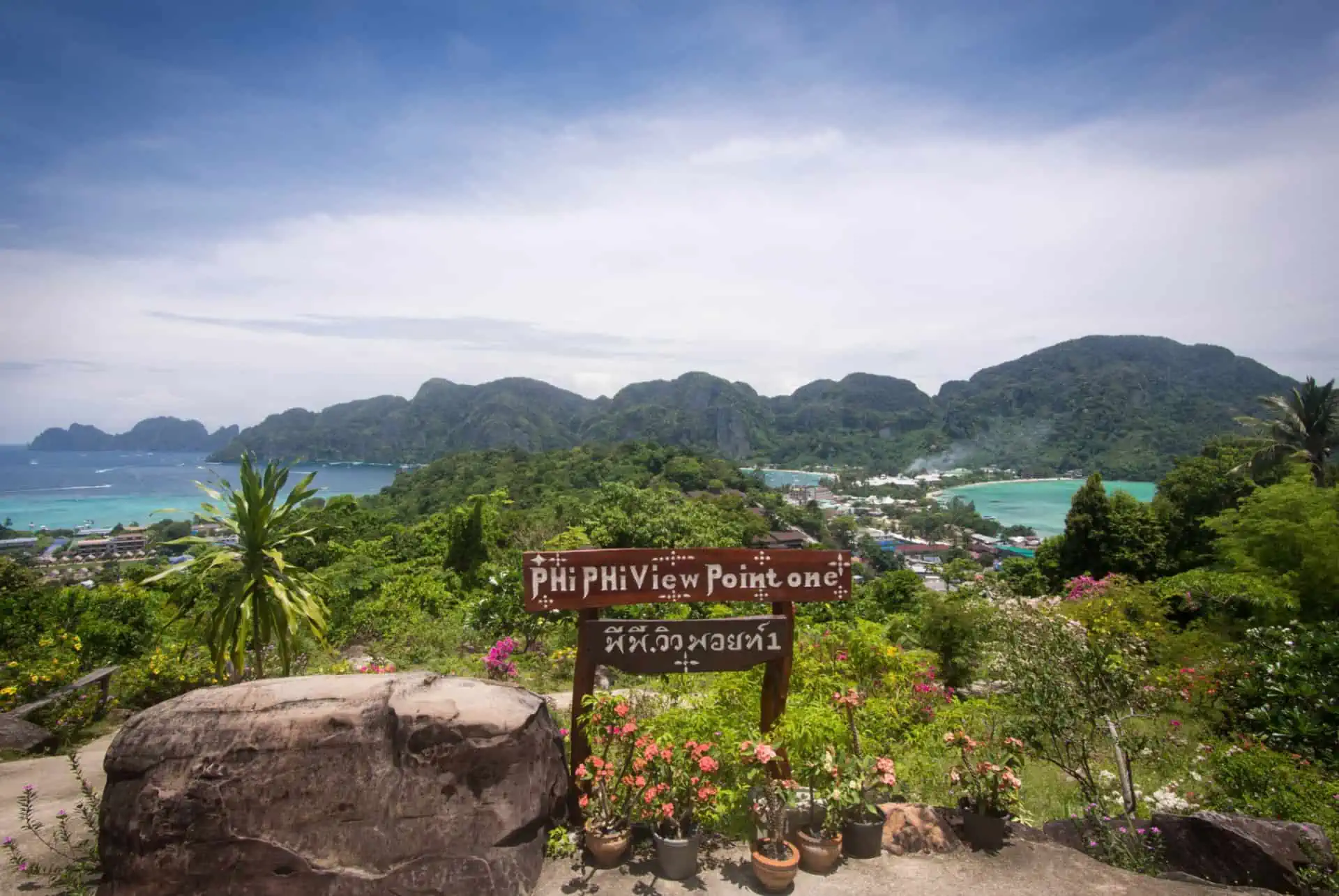
First platform reached from the stairs above Tonsai Village, a warm-up angle over Tonsai Bay before the trail continues upward.

Viewpoint 2

Viewpoint 2

Best light: Morning for clear haze-free air, or just before sunset

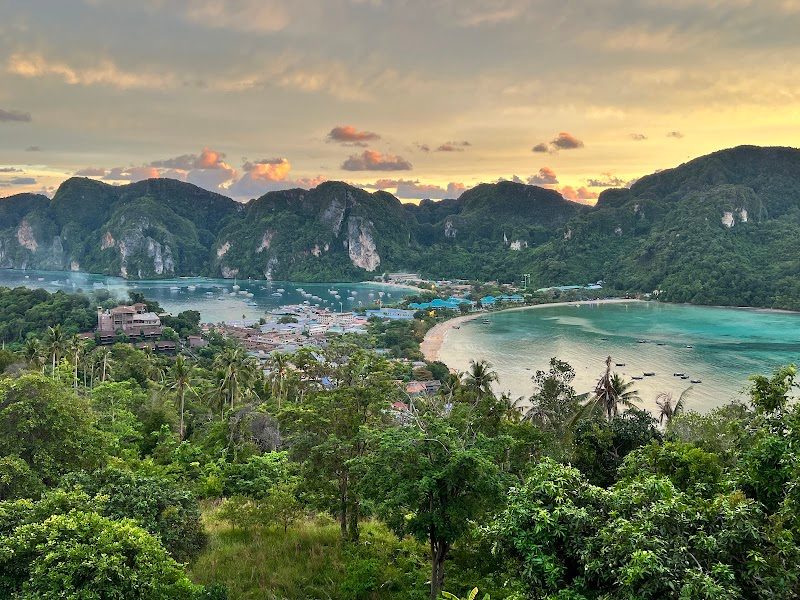
The classic two-bay composition, framing Tonsai Bay and Loh Dalum Bay on either side of the narrow isthmus with Koh Phi Phi Leh in the distance.

Viewpoint 3 (Haad Yao)

Viewpoint 3 (Haad Yao)

Best light: Late afternoon into sunset

Set beside a small restaurant and jetty above Long Beach, angled west for open-horizon sunset shots over the Andaman Sea.

Tsunami Evacuation Route stairs

Tsunami Evacuation Route stairs

Best light: Early morning before heat and crowds

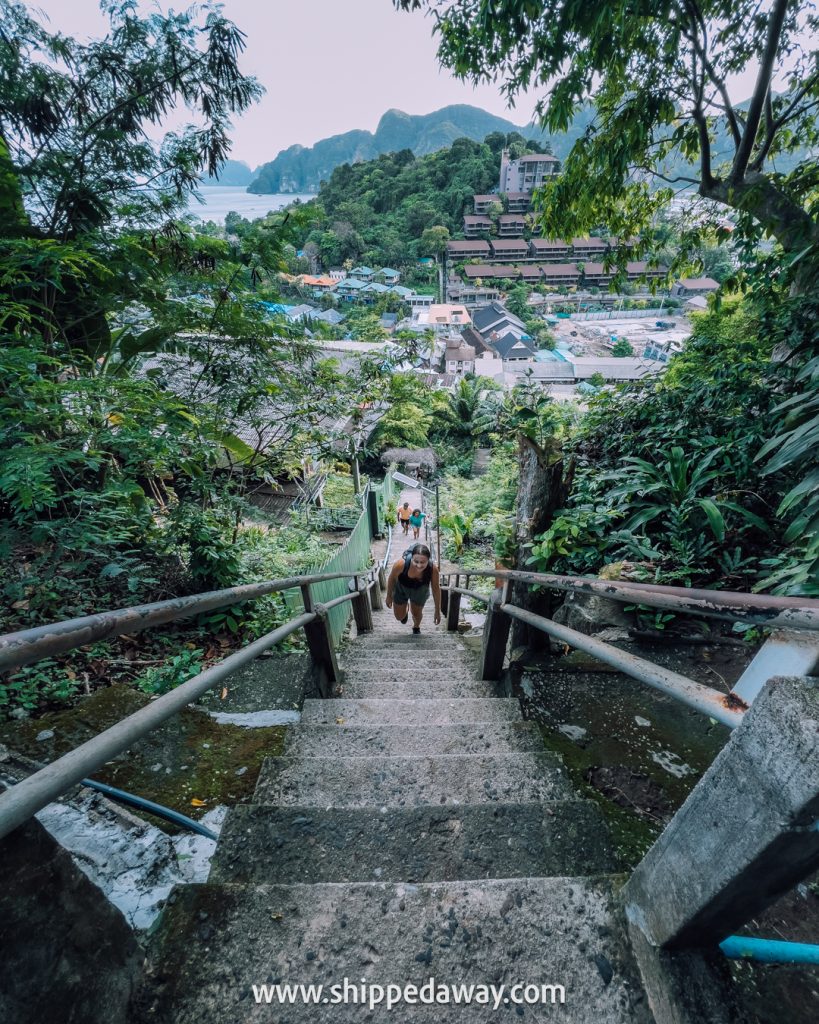
The steep staircase switchbacks leading out of Tonsai Village, useful for a vertical shot looking back down over the village rooftops.

Long Beach (Haad Yao) shoreline

Long Beach (Haad Yao) shoreline

Best light: Late afternoon golden light

Low-angle shot along the sand looking back toward the limestone cliffs behind Tonsai, reachable directly from the beach without the full viewpoint climb.

FAQ

Phi Phi Island — frequently asked questions

Ready to Explore?

Choose from amazing attractions and create unforgettable memories in this beautiful city

Book Your Experience Now