
7 hr 30 min
Phi Phi Islands Speedboat Day Tour from Krabi with Buffet Lunch
- Expert local guide
- Small group
- Skip-the-line access
- Free cancellation
Krabi To Phi Phi Tour — Speedboat & Longtail Island Crossings
Limestone cliffs at first light, turquoise water before the crowds.
Compare fares, pick the fit — all bookings are mobile-voucher and eligible for free cancellation where shown.
7 hr 30 min
7 hr 30 min
9 hr 30 min
Anyone planning a krabi to phi phi tour has three real ways to make the crossing before paying the fixed 400 THB national park fee at the entry point: public ferry, shared speedboat, or a private charter. Each trades price against travel time and crowding, so the right pick depends on budget, schedule, and tolerance for choppy Andaman Sea swells.
| Public Ferry (Scheduled, Shared) |
Top pick Shared Speedboat (Group Transfer) |
Private Charter (Exclusive Boat) | |
|---|---|---|---|
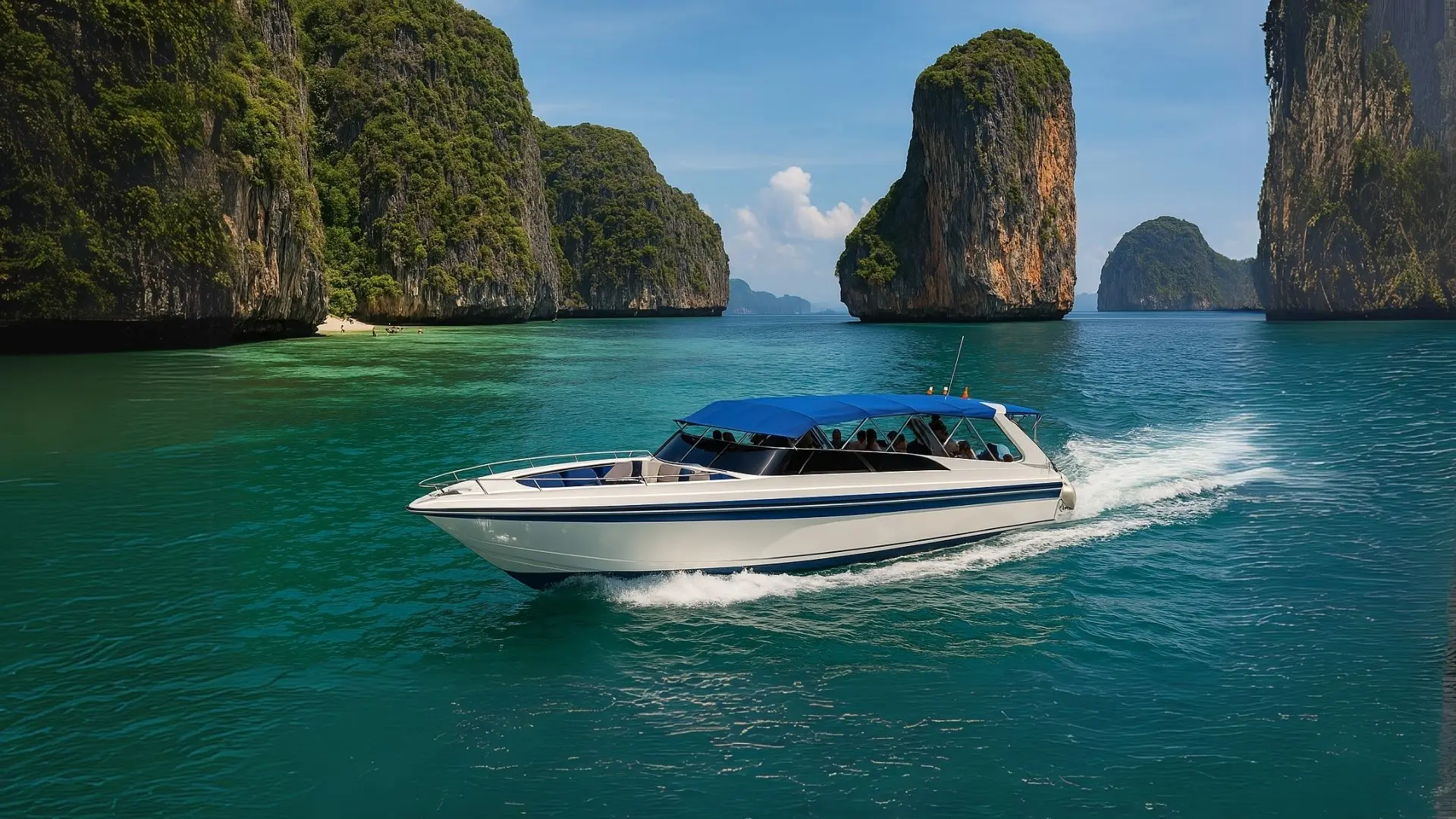
| Boat type | Large air-conditioned ferry, fixed schedule | Shared high-speed boat, 6-8 daily departures | Chartered speedboat, booked for one group |
| Typical price range | 300-450 THB one-way | 700-1,200 THB one-way | 3,000-8,000 THB per boat |
| Travel time | 40-60 minutes from Nopparat Thara or Ao Nam Mao | 30-45 minutes, direct route | |
| Group size | 100-150 passengers per crossing | 20-40 passengers per crossing | Private, 1-10 passengers |
| Comfort/seasickness risk | Lower risk, steadier hull, indoor AC seating | Moderate risk, bouncier ride in swells | Adjustable speed reduces bumps, but still open water |
| Best for | Budget travelers, first-timers on a fixed itinerary | Most first-timers wanting speed without private cost | Families or groups wanting flexible timing and privacy |
| See tickets & prices |
Verdict: First-timers doing a straightforward krabi to phi phi tour tour generally get the best balance of speed and cost from the shared speedboat, while strict budget travelers should take the ferry and groups wanting flexible timing should book a private charter.
Worth it for first-time island hoppers
A krabi to phi phi tour usually runs 1,200–1,800 THB per adult, and that price sits on top of the 400 THB national park fee paid cash at entry. For that outlay you get the speedboat transfer, Maya Bay access, snorkelling stops, and the limestone viewpoints that make these Krabi landmarks famous. The value math works if you treat it as a full-day package: fuel, guide, gear, and lunch bundled into one Phi Phi Island tour beat piecing it together yourself. Most krabi to phi phi tour tours leave Ao Nang by 08:30, hitting the calmer 08:30–11:00 window before crowds thicken. Where it pays off: snorkellers and first-timers who want the marquee sights without logistics. Where it disappoints: travellers craving quiet beach time, since the boat schedule keeps you moving. Book the private krabi to phi phi tour tickets if unhurried water and shorter queues matter more than saving baht.
Bottom line: For a first Phi Phi trip the skip-the-line convenience justifies the fare, but independent beach-lovers should book private and go early.
Hand-picked experiences loved by thousands of travelers
8.5 hours
Free Cancellation
Beat the crowds at iconic Maya Bay with a late speedboat departure, two snorkel stops, and a golden Andaman sunset.
9.5 hours
Free Cancellation
Race across the Andaman Sea to Maya Bay at dawn, snorkel coral reefs, and island-hop 4 stunning destinations.
8 hours
Free Cancellation
Explore Maya Bay, Bamboo Island & hidden lagoons on a flexible 8-hour private speedboat adventure.
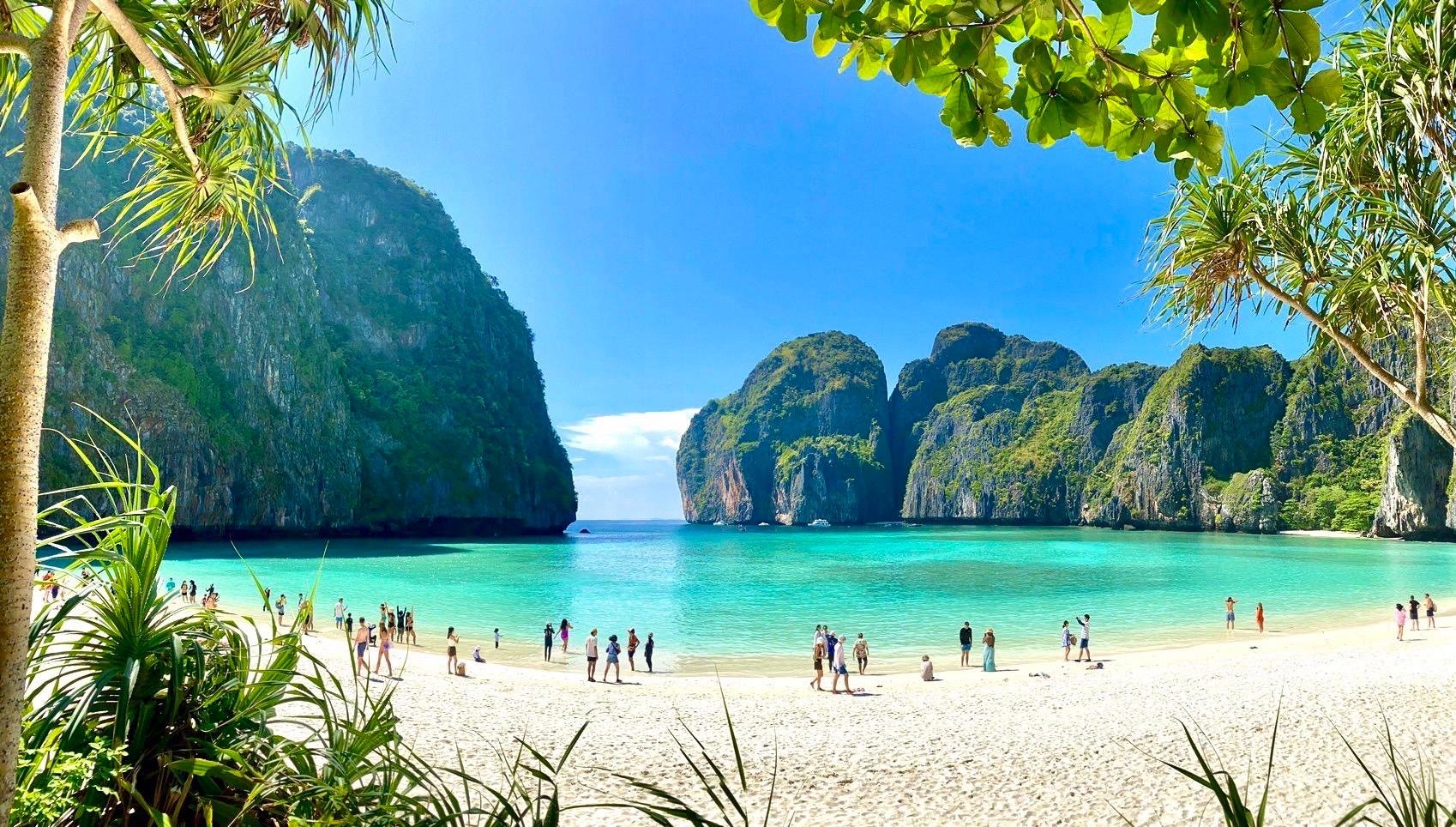
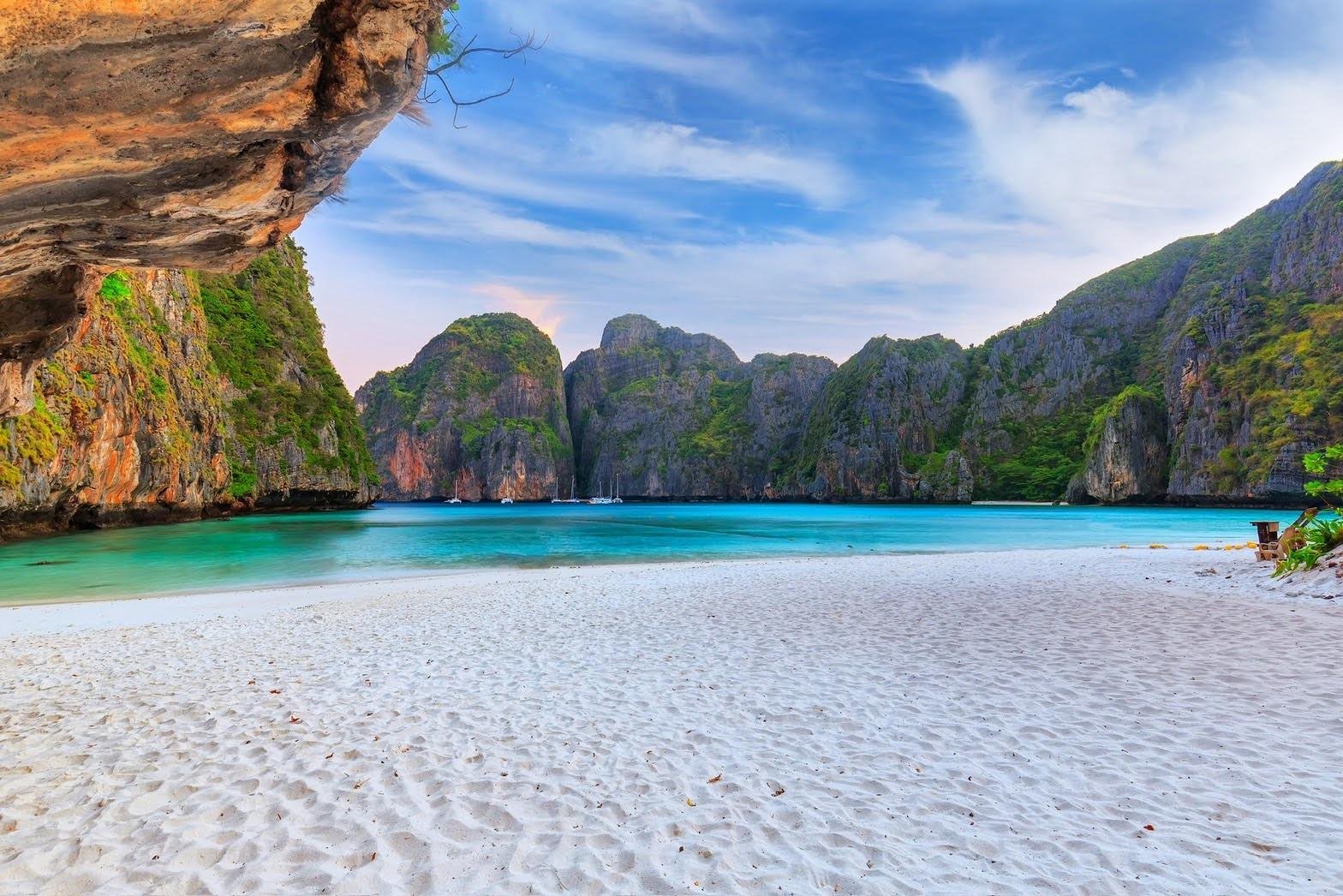
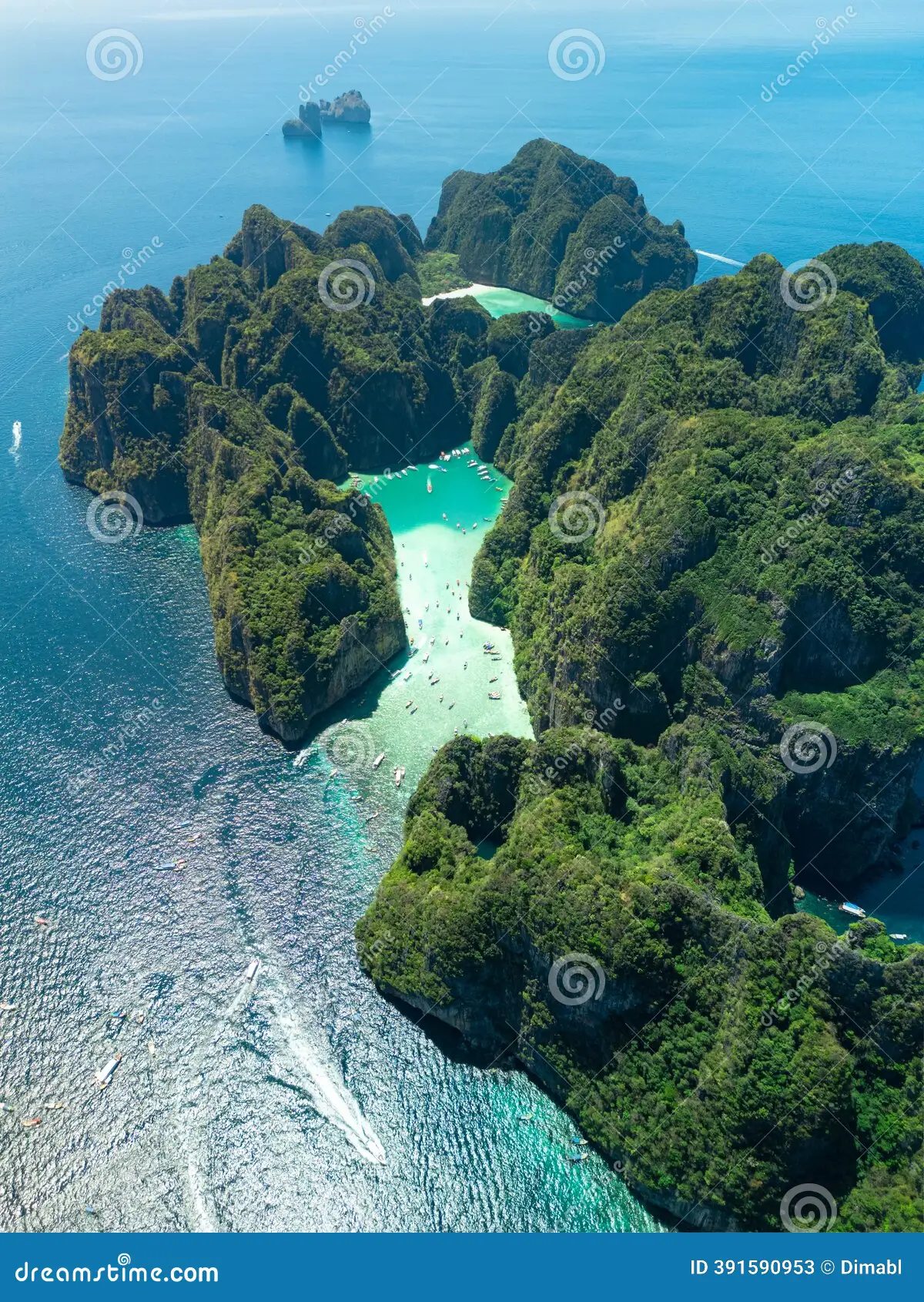
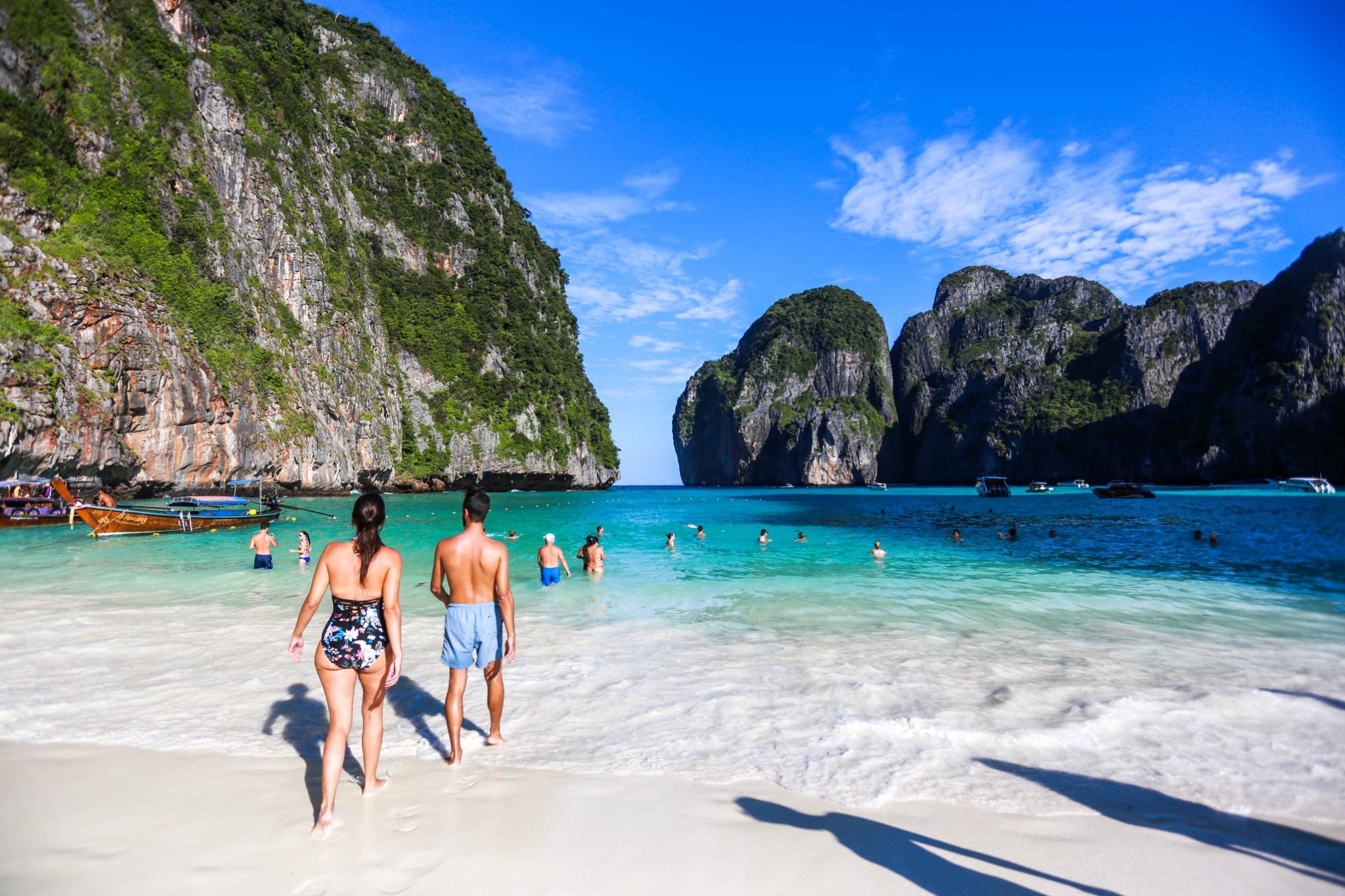
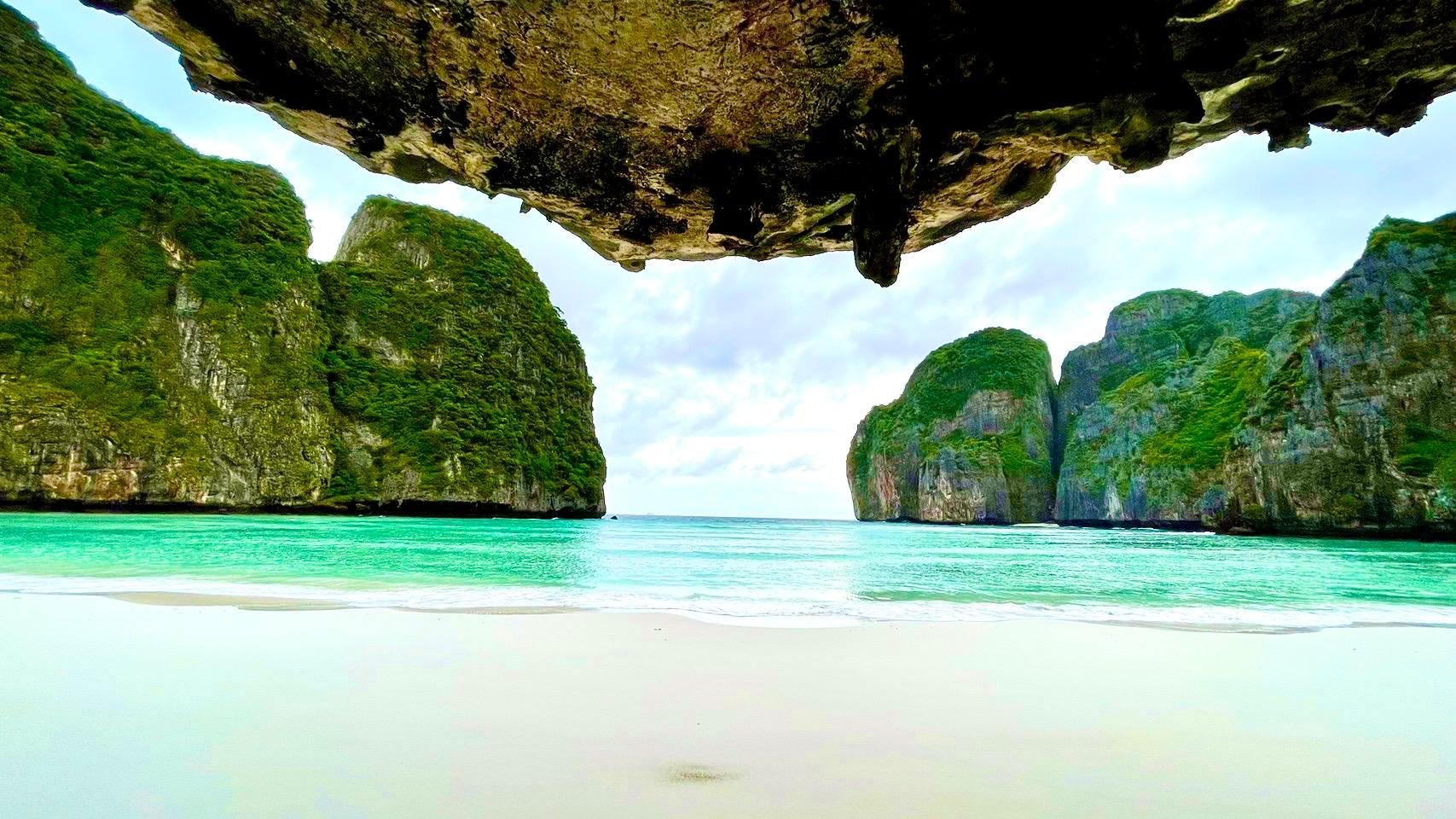
Enclosed cove on Phi Phi Leh with steep limestone cliffs on three sides, made globally known after appearing in a 2000 film. Visitor numbers are capped and the beach closes annually from August 1 to September 30 to let coral and seagrass recover.
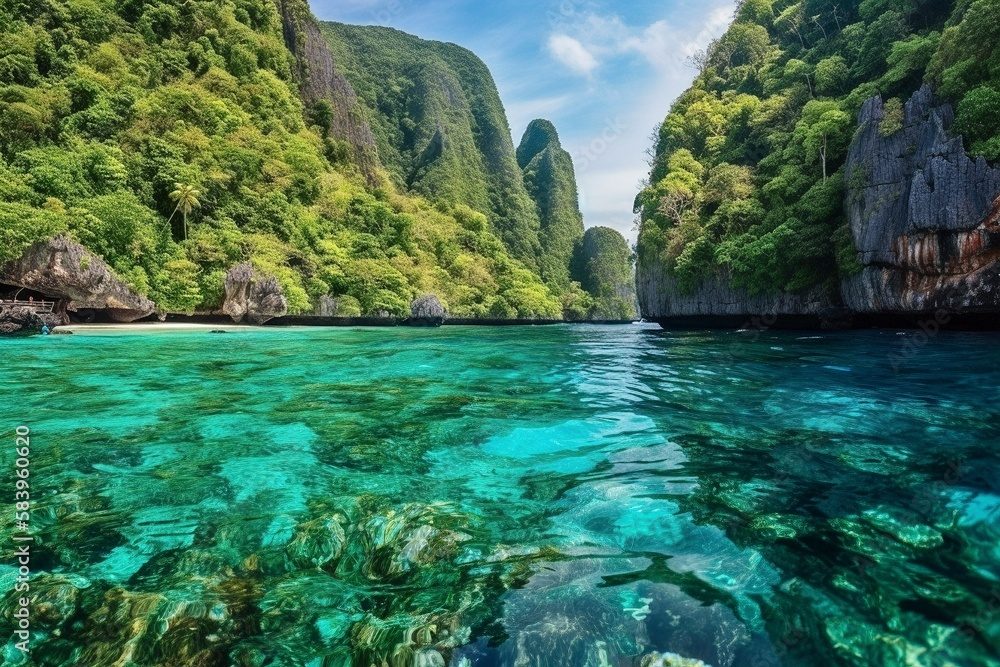
Nearly enclosed emerald-water lagoon reached through a narrow gap in the cliffs of Phi Phi Leh, popular for a brief swim stop on longtail cruises. The lagoon's still, deep water reflects the surrounding rock walls almost like a mirror.
Elevated lookout above Tonsai Village reached by a stepped path of roughly 200 steps, offering a view over both of Phi Phi Don's curved bays at once. The climb takes about 20-30 minutes and is busiest around sunset.
Small sandy cove on Phi Phi Don accessible by longtail boat or a rocky coastal walk, named for the resident long-tailed macaques that forage along the shoreline. Visitors are advised not to feed or touch the monkeys.
Small coral-fringed island north of Phi Phi Don, officially named Koh Mai Phai, ringed by shallow reef that makes it a common snorkeling stop on day cruises. The island has no permanent settlement and limited facilities beyond a ranger checkpoint.
Pedestrian-only village wedged on a narrow isthmus between two bays on Phi Phi Don, filled with guesthouses, dive shops, and open-air restaurants. No cars or motorbikes operate here, so goods move by handcart along the narrow lanes.
All the details about your upcoming adventure in one place
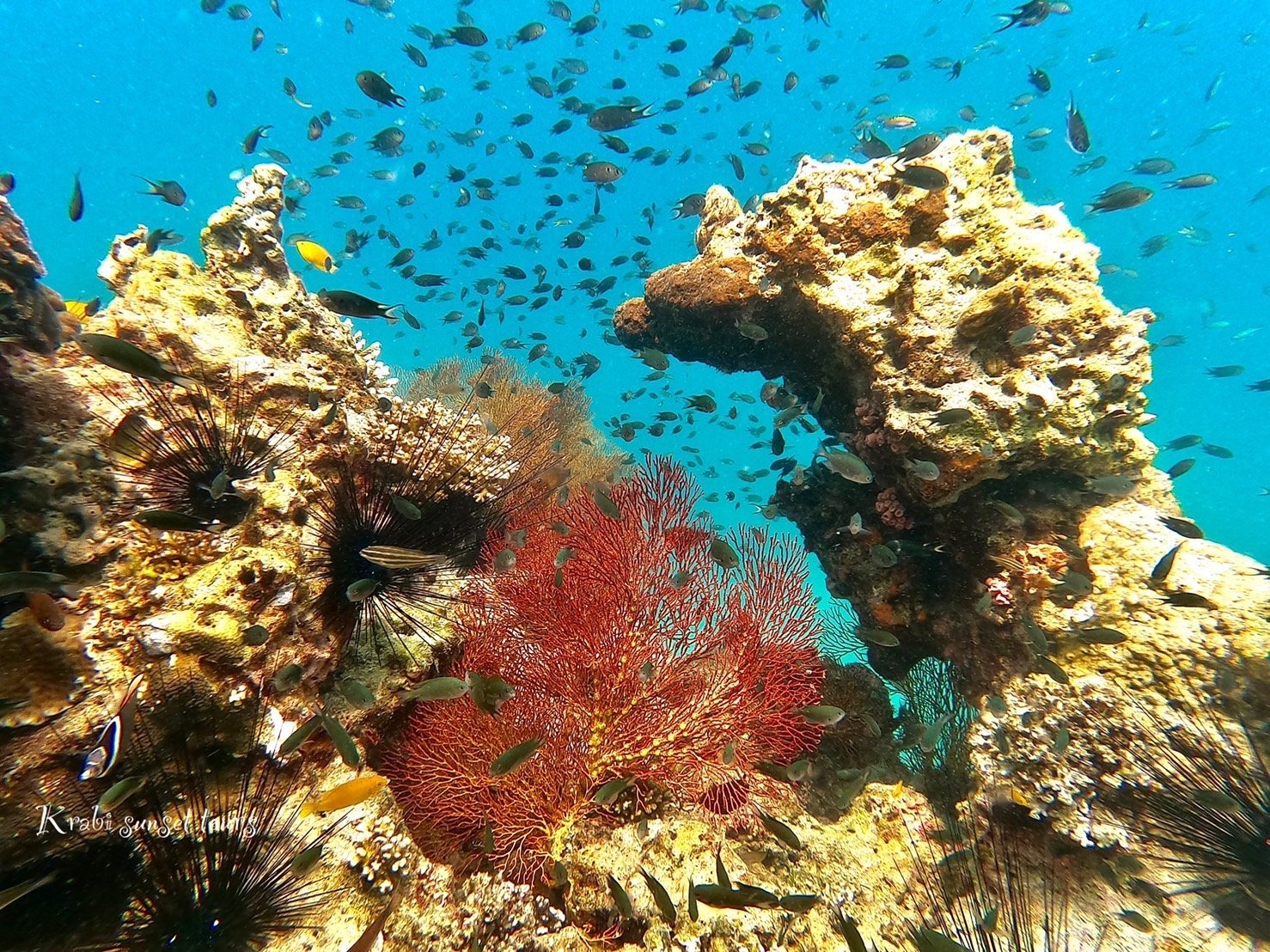
A krabi to phi phi tour carries you across the Andaman Sea to the limestone karsts and clear lagoons of Maya Bay, Pileh Lagoon, and Viking Cave. Most krabi to phi phi tour tours pair snorkeling over coral reefs with a stop at Monkey Beach and Bamboo Island, giving you a full taste of the archipelago in a single day. Booking a Phi Phi Island boat trip from Krabi keeps the transfer, guide, and equipment bundled into one straightforward outing.
The Phi Phi archipelago sits roughly 40 kilometres offshore from Krabi, a cluster of six islands rising from the Andaman Sea as sheer walls of grey-and-ochre limestone. Only one, Ko Phi Phi Don, is inhabited; the rest, including the celebrated Ko Phi Phi Le, remain uninhabited and protected within the Hat Noppharat Thara–Mu Ko Phi Phi National Park. The stone here is Permian limestone, laid down more than 250 million years ago when this coast lay beneath a shallow tropical sea, later thrust upward and carved by rain and wave into the karst towers that now define the horizon. A well-run krabi to phi phi tour reads this landscape as geology as much as scenery. The islands entered global consciousness in 2000, when the film adaptation of Alex Garland's novel was shot at Maya Bay on Ko Phi Phi Le. The attention that followed proved double-edged. By 2018, the bay's coral had been so degraded by daily boat traffic that Thai authorities closed it entirely for recovery. It reopened under strict controls in 2022, with boats now barred from entering the bay itself and visitor numbers capped. The park administration continues to manage access carefully, and the conservation fee reflects that stewardship. Beyond Maya Bay, the waters hold their own record. Viking Cave, on the eastern flank of Ko Phi Phi Le, is named for wall paintings of ships and is still harvested seasonally for swiftlet nests, a trade documented here for centuries. Pileh Lagoon, a flooded basin ringed entirely by cliff, holds water so still it mirrors the rock above it. Snorkelers over the shallow reefs off Ko Phi Phi Don and Bamboo Island find staghorn coral, blacktip reef sharks, and clouds of sergeant major fish. The 2004 Indian Ocean tsunami struck the low isthmus of Ko Phi Phi Don with particular force, and the rebuilt village stands as quiet evidence of the community's return. Today the crossing itself has become part of the appeal, whether by speedboat in under an hour or by slower wooden longtail. A thoughtfully composed krabi to phi phi tour treats the journey as a sequence: the departure from the mainland, the open-water passage, the first sight of the towers breaking the sea line. Semantic variations such as a phi phi island day trip or a maya bay boat tour describe the same protected geography under different names. The park spans limestone, mangrove, and coral reef, a single ecosystem that the best krabi phi phi island tours are built to move through without disturbing.
The stone here is 250 million years old, thrust from a tropical sea into the towers that now define the horizon.
Most Krabi to Phi Phi tour operators allow free cancellation up to 24 hours before departure, with a full refund minus any processing fee. The 400 THB national park entrance fee is collected in cash at the entry point and is separate from any tour or ferry cancellation terms.
Weather · crowds · average price — dots go green to amber to red as each metric rises.
Dry season with calm seas and cooler air near 27-30°C, the most reliable months for a krabi to phi phi tour and clear underwater visibility.
Hot season with temperatures often exceeding 33°C, seas remain generally calm and Maya Bay stays open through this window.
Start of southwest monsoon with intermittent rain showers and choppier crossings, though many days still run without disruption.
Wettest months with the highest chance of rough seas and the annual Maya Bay closure from August 1 to September 30 for ecological recovery.
Transitional month as monsoon eases, seas gradually calm ahead of the dry season return.
During peak dry season months, seats on the Krabi to Phi Phi tour ferries can sell out a day or two in advance, especially on weekend departures.
The 400 THB national park entrance fee is collected in cash at ranger kiosks, so bring exact or small denomination Thai baht rather than large notes.
Wading ashore at beaches like Maya Bay means phones and cameras get exposed to seawater, so a simple waterproof pouch protects electronics.
The beach closes annually from August 1 to September 30, so travelers visiting during this window should confirm the itinerary includes alternative stops.
Chemical sunscreens are discouraged in the marine park zones to protect coral, so mineral-based reef-safe formulas are the better choice.
Crossings during the monsoon shoulder months (May-Jul) can get choppy, so tablets or wristbands help sensitive travelers.
Ko Phi Phi Don and its uninhabited sister Ko Phi Phi Le sit in the Andaman Sea, once home to Muslim fishing families and swiftlet-nest collectors who scaled the limestone walls of Viking Cave. In 1983 the Thai government declared the archipelago part of Hat Noppharat Thara–Mu Ko Phi Phi National Park, folding both islands into a protected marine reserve. Through the 1980s and 1990s, low-cost bungalows spread across the narrow isthmus of Tonsai, and the modern krabi to phi phi tour began carrying budget travellers across the strait toward cheap beds and coral reefs. Danny Boyle's film The Beach, shot on Maya Bay in 1999 and released in 2000, transformed the islands. Producers altered dunes and planted palms on Ko Phi Phi Le, drawing lawsuits over environmental damage. The controversy did little to slow arrivals; the descriptive Phi Phi Island tour surged as backpackers chased the screen paradise. LSI anchors of this era were Leonardo DiCaprio, Maya Bay, Viking Cave, and the sheer karst cliffs that framed every arrival. On 26 December 2004 the Indian Ocean tsunami struck Tonsai and Loh Dalum bays, where two beaches met at sea level with no high ground between them. More than seven hundred people died on Phi Phi, and much of the flat village was flattened. Reconstruction was slow and debated, guided partly by a proposed buffer-zone plan. Operators rebuilt guesthouses, dive shops reopened, and skip-the-line Phi Phi ferry access returned as the economy recovered. Maya Bay closed to visitors in June 2018 to let reefs regenerate, reopening under strict limits in 2022. Today a krabi to phi phi tour operates within national-park rules, and demand for krabi to phi phi tour tickets reflects the islands' layered past. Visitors booking krabi to phi phi tour tours or a single krabi to phi phi tour tour now cross the same strait that fishermen, filmmakers, and survivors knew before them, among Krabi's most storied Andaman landmarks.
Muslim fishing families and swiftlet-nest gatherers inhabited Phi Phi Don and worked Viking Cave.
The islands were declared part of Hat Noppharat Thara–Mu Ko Phi Phi National Park.
The Beach was filmed on Maya Bay and released, sparking environmental lawsuits.
The Indian Ocean tsunami killed over seven hundred people and destroyed Tonsai village.
Guesthouses, dive shops, and ferry services were slowly rebuilt across the isthmus.
Maya Bay closed to tourists to allow damaged coral reefs to recover.
Maya Bay reopened under strict visitor and boat-access limits.
The elevated deck above Maya Bay frames the crescent beach hemmed by limestone cliffs, with turquoise shallows fading to deep blue offshore. Many visitors on a krabi to phi phi tour arrive by longtail and climb the short path to this platform for the classic overhead angle. Boats are restricted from anchoring directly on the sand, keeping the bay itself clear in shot.
A rope-and-boat-free vantage from the cliff edge above this enclosed lagoon shows near-vertical rock walls ringing impossibly clear jade water. Boats usually pause just outside the lagoon mouth for a few minutes, so shoot from the bow before drifting further. Midday sun gives the water its most saturated color.
Reached after a steep staircase climb from Tonsai village, this first lookout gives a wide two-bay panorama with Tonsai on one side and Loh Dalum on the other. A wooden observation deck and large boulders serve as natural foreground framing. Arrive early to avoid the queue that forms on the stairs by mid-morning.
A few minutes further uphill, this platform offers a sharper, unobstructed view of both bays and is generally considered the better composition of the three stops. A drone launch area sits nearby for aerial shots. Sunset here captures the strip of land glowing between the two bays.
The highest and least crowded of the three, this jungle-path lookout faces the setting sun directly and reaches toward distant silhouettes of Mosquito Island and Bamboo Island. The uneven trail keeps numbers low even during peak sunset hours.
A shallow, powder-white shoreline ringed by coral reef gives Bamboo Island a brighter, quieter contrast to the cliffs of Phi Phi Leh. Standing at the tideline with the empty curve of sand behind you is the standard composition here. Fewer boats stop here than at Maya Bay, so the beach often stays uncluttered in frame.
Visiting Phi Phi Island with children is entirely doable, but the boat crossing shapes the whole day more than any stop on the itinerary. A well-chosen krabi to phi phi tour paired with realistic pacing keeps young kids comfortable rather than overwhelmed by heat, waves, and a long list of stops.
Big boats and catamarans give a steadier ride than speedboats, which matters most for children prone to motion sickness on choppier seas between May and October. If seasickness is a concern, a slower, larger vessel beats shaving time off the crossing.
Ask upfront whether child-sized life jackets are available and confirm they fit snugly before boarding, since ill-fitting adult jackets slip off in the water. Crew should hand these out and brief kids alongside adults, not just during the swim stop.
Snorkeling suits children roughly seven and up who can wear a mask comfortably and follow instructions in open water. Younger kids can still enjoy shallow paddling near the beach in a fitted life jacket while an adult stays close.
A full-day krabi to phi phi tour tour runs long for young children, so build in shaded rest breaks between stops rather than treating every beach as a swim stop. Arriving within the 08:30–11:00 window helps kids handle the heat before midday crowds and stronger sun set in.
Basic restrooms exist near Tonsai village on Phi Phi Don, but options thin out at outlying beaches and viewpoints, so plan bathroom breaks around the main stop. Bring extra water and snacks, since island food stalls can queue up fast with tour groups.
Most krabi to phi phi tour groups take lunch as a set beach buffet or packed box near the boat mooring, so nothing to arrange yourself on the day trip; if you're staying on longer, Tonsai Village is a two-minute walk from the pier with plenty of proper sit-down options.
Standard fried rice, noodles, grilled chicken and fruit set out under shade near the boat mooring point; quick and functional rather than memorable, and it gets busy the moment tour groups arrive together.
A long-running Tonsai favorite for thin-crust pizza and pasta at fair prices, popular with overnight visitors after the last krabi to phi phi tour boats head back; fills up around dinner time.
Go for the tom yum and fresh grilled fish; a solid sit-down option if you're staying a night or two rather than doing the day trip.
Good for breakfast, iced coffee or a quiet afternoon snack once the day-tripper crowds have thinned out and boats have left for the afternoon.
A short walk from Tonsai Pier, known for curries and reliably fresh seafood; busiest in the evening once the island empties of same-day visitors.
Everything you need to know for your journey
Boarding at Krabi piers often involves steps or a gangplank, and island paths include uneven limestone and sand, so travelers with mobility needs should confirm boat type with the operator before booking.
Single-use plastic bags, glass bottles, spearfishing gear, drones without approval, and coral or shell collecting are among the items restricted within the national park.
Standard cameras and phones are welcome throughout the park, but drone use requires prior approval from Krabi park authorities.
The dry season from November to February offers the calmest seas and clearest water for a krabi to phi phi tour, while August and September bring the Maya Bay closure and rougher conditions.
Quick-dry swimwear, a cover-up, and sturdy sandals work best, since most of a krabi to phi phi tour takes place on boats and beaches.
Bottled water and packed snacks are fine on the boat, but food isn't allowed on protected beaches such as Maya Bay.
Yes, life jackets are mandatory for children on all boat transfers, and reduced entrance fees apply for kids aged 3-14.
Most operators offer free cancellation up to 24 hours before departure with a full refund minus any processing fee.
Bamboo Island and Koh Lanta are common add-ons that pair well with a krabi to phi phi tour itinerary.
Pedestrian-only village on Phi Phi Don packed with shops, guesthouses, and restaurants between two curved bays.
Elevated lookout over Tonsai's twin bays reached via a stepped uphill trail from the village.
Sheltered swimming and snorkeling bay southeast of Tonsai Village with calmer water than the main pier beaches.
Small coral-fringed island north of Phi Phi Don popular for snorkeling stops on day cruises.
Small cove on Phi Phi Don known for resident long-tailed macaques along the shoreline.
Beach town with dense choice of resorts and guesthouses near the main Krabi departure pier.
Cluster of small hotels and bungalows within walking distance of Tonsai Pier and the beach village.
Quieter resort area on the island's north side served by private boat transfer rather than the main pier.
Join thousands of happy travelers who have discovered this incredible experience
Book Your Experience Now